

The NHL Playoffs and Your Fiber Network: Get Ready to Perform When It Counts
Here we go, it’s finally started! The NHL playoffs are that magical time when the whole year comes down to a few weeks of “real” hockey. While watching the playoffs the other day, we thought to ourselves, “Come to think of it, it’s pretty much the same as managing a fiber-optic network!” Think we’re joking? Wait until you read this.

5 Steps to Prepare Your Network for the Construction Season
The arrival of spring isn’t just about maple trees and syrup, it also marks the start of construction season! And if you manage a fiber-optic network, that means you’ll soon be facing a flood of requests for cable location, excavation, and probably a few panic calls when the excavators get too close to your cables.
We’ve seen it happen time and time again: network managers who fail to prepare for the construction season end up facing stressful and costly situations. Accidental damage, project delays, frustrated customers, all of this could have been avoided with proper preparation.
So, let me share with you the five essential steps to ensure that your fiber-optic network gets through the construction season without a hitch.

The digital twin: Your network has a duplicate, and that’s good news
Have you ever imagined this? You have a perfect duplicate somewhere that knows exactly where every cable runs, how many customers are connected, what equipment is installed where, and the complete history of all your work. This isn’t science fiction, it’s exactly what a digital twin can do for your fiber-optic network.
Except that your doppelganger doesn't live in a parallel universe; he lives on your computer. Unlike your imaginary counterpart, he works around the clock to make your life easier.

Earth Day: Why Your Fiber Network Management Can Really Make a Difference
You’ve probably heard of Earth Day, it’s been celebrated on April 22 every year since 1970. And honestly, after watching all those documentaries about global warming and oceans full of plastic, we tell ourselves we’re doing our part by recycling our Molson cans, right?
But here’s the thing: if you manage a fiber optic network, your environmental impact may be much greater than you realize. And so are the solutions to reduce it!

The 5 Pillars of Network Documentation: Turning Information into Knowledge
Imagine two network teams. One uses an up-to-date documentation system: it knows exactly which cable runs where, who installed it, why that detour exists, and when the last maintenance was performed. The other? It relies on fragmented notes, conversations lost in emails, and knowledge that exists solely in the minds of two key employees. When one of those employees leaves, part of the network goes with them. When a failure occurs, no one knows where to start.
And unfortunately, this scenario of document chaos? It’s still a reality for far too many organizations in our field. Teams relying on makeshift processes, wasting hours searching for simple information, living in constant fear that the departure of a key person will throw everything into disarray. Zonedge exists precisely to transform this reality, to move teams from uncertainty to clarity, from fragility to resilience.
What’s the difference between an organization that has its infrastructure under control and one that’s stumbling in the dark? It’s not just about the technology. It’s about living documentation. Not the kind that sits dormant in PDFs at the bottom of a digital drawer, but the kind that answers five fundamental questions every day: what, where, when, who, and why.
These five pillars form the foundation. Whether you're a network administrator, an engineer, or a field technician, without them, you're driving with the GPS turned off.

Do you really see your fiber-optic network… or just the surface?
The difference between a generic CAD/GIS map and Zonedge is exactly the same as the difference between a photograph and an X-ray.
Imagine two doctors examining a patient who is complaining of knee pain.
The first one pulls out his phone and takes a picture of the knee. Nice photo! You can see the skin, the general shape, and the position of the leg. It’s clear, even precise. But honestly… what does that tell us about what’s going on inside?
The second doctor sends the patient for an X-ray. Or better yet, an MRI. That way, you can see everything: the bones, cartilage, ligaments, and tendons. You can see exactly where the problem is, why it hurts, and how to fix it.
That’s the difference between managing your fiber-optic network with a generic CAD or GIS tool… and managing it with Zonedge.

Golf and fiber network management: two activities that require precision
It’s not every day you hear that managing a fiber-optic network is a bit like playing golf! But with the Masters Golf Tournament taking place from April 6 to 12, now is the perfect time for this analogy. Because in golf, just like in fiber management, it’s all about preparation, precision, and mastering challenges.
Why are golf and fiber so strangely similar?
At the Masters, players tear their hair out when their shot is off by 5 millimeters. Five millimeters!
Well, it’s the same with fiber optics. A fiber just a few micrometers thick has to be spliced with incredible precision. A misaligned swing in golf? You miss the hole. A poorly spliced fiber? You lose your customer.
In golf: a clear goal (getting the ball in the hole), specific steps (tee shot, approach shot, putt), and a complex course. In fiber optics: a clear goal (establishing a reliable connection), specific steps (design, deployment, testing), and a complex network that constantly challenges you.

Artemis II Mission: What the Moon Launch Teaches Us About Managing Your Fiber Networks
I'm going to admit something to you.
On April 1st, I was glued to my screen like a 10-year-old on Christmas morning. Not because of an April Fool’s prank, no, no. I was there, eyes wide open, watching the live launch of the Artemis II mission. The SLS rocket on its launch pad in Florida, the flames, the smoke, and in the nose of this technological beast: four astronauts getting ready to orbit the Moon.
A shiver down your spine. A lump in your throat. The kind of moment that reminds you why human beings, sometimes, are truly extraordinary.
But you know me, when I saw that, I thought to myself, “Wow. It’s just like managing a fiber optic network.”
Let me explain.

The Easter egg hunt and your fiber network: when searching in the dark is never a good idea
There's something inherently chaotic about an Easter egg hunt.
No matter how carefully you spent 45 minutes the night before hiding them, under the flowerpot, behind the fence, in the hollow of a tree, the next morning, it’s total chaos. The kids are running all over the place, looking in the wrong spots, walking past the same egg ten times without seeing it, and inevitably one of them bursts into tears because their cousin found six and they only found two.
And you, watching all this, know exactly where all the eggs are. You're the only one with that information, but you can’t play the game for them. All you can do is watch and hope it ends well.
Does that situation sound familiar to you?

Your network is playing tricks on you (and it's not just April Fools' Day)
April 1st is the official day for pranks and jokes. The coworker who pins a paper fish to your back. The boss who announces a fake office move. The coffee pot that someone filled with decaf without telling anyone. (It’s cruel. It’s unforgivable. But that’s just how the game is played.)
Except that in the world of fiber network management, you have a full-time prankster in your life. He doesn’t take the day off on April 2. He doesn’t warn you in advance. And his timing is absolutely diabolical.
Its name is your network.

Spring Cleaning for Your Fiber Optic Network, Physical AND Digital
Do you remember your grandmother’s big spring cleaning? Not just a quick wipe-down on Saturday morning. No, no. The real big clean. The one where she moved the furniture away from the walls, washed the ceilings, dusted behind the fridge, cleaned the windows with newspaper, and took down the curtains to wash them by hand. Nothing escaped her notice. Absolutely nothing.
It was methodical. It was systematic. And when she was done, you could tell just by the way the house felt that it was truly clean, not just on the surface.
Well, your fiber-optic network deserves exactly the same treatment. It’s not just about making sure the technicians have everything they need to get started in the morning. It’s not just about sending a report to your boss because it’s been ages since you’ve had a complaint. It’s a thorough overhaul, the kind that leaves no stone unturned.
The good news? It’s the perfect time to do it. Spring is the season for new projects, new clients, and new connections. You might as well start off with a clean house!

Your fiber network isn't a static map, it's a living system
Have you ever tried navigating a big city like Montreal, Toronto, or New York during rush hour with nothing but a paper road map from the 1980s to guide you? You’d better arm yourself with patience, and a cup of coffee!
I’m talking about that good old map we used to keep in the glove compartment, a crumpled mess that was impossible to fold back into shape, with a route scribbled in red pen by someone who knew “a shortcut.” The map was accurate; the streets were where they were supposed to be. But if there was roadwork on a major thoroughfare, an accident on the bridge, or you simply wanted to avoid rush hour, the map told you... absolutely nothing. You were on your own with your judgment and your AM radio.
These days, everyone uses Google Maps or Waze, whether you're in Quebec City, Calgary, or Halifax. Not because paper maps were inaccurate. But because driving isn't just about seeing the roads, it's about navigating a system. Traffic, incidents, detours, real-time updates. It's a whole different ballgame.
Well, guess what. Your fiber-optic network is exactly the same.

“You are here”, But do you really know where your fibers are?
You know that big directory board in the mall, the one with the floor plans, the little store logos, and that red (or yellow, depending on the mall) star with the words “You are here”?
If you’ve ever looked for a pharmacy in a three-story shopping complex with 140 stores, you know just how much that little sign can save you an entire afternoon. Without it, you end up going in circles. You walk past the same phone booth twice. You eventually end up asking a janitor.
Now imagine that same feeling of confusion, but multiplied by one thousand, when you try to trace a fiber in a network that stretches tens of kilometers through streets, fields, buildings, and underground infrastructure.
This is exactly the daily challenge faced by teams managing fiber-optic networks without the right tools. And this is exactly where Zonedge makes a difference.

The four-leaf clover and your fiber network: Don't let luck decide your success
March 17 is St. Patrick's Day. All over the world, people dress in green, raise a glass of Guinness, and look for four-leaf clovers to bring them luck.
It's a cute tradition. Really.
But let me ask you a direct question: do you manage your fiber optic network with the same logic? Crossing your fingers and hoping that everything will be okay?
Because I still regularly encounter network managers who essentially rely on luck. Their documentation is only half up to date. Their deployment plans are in Excel files scattered across three different computers. Their field technicians work with information that is six months out of date. And when a failure strikes at 2 a.m., everyone runs around like headless chickens hoping to find the right cable.
It's not management. It's a lottery.
The good news? The four-leaf clover hides a much more interesting analogy than just luck. Each of its leaves represents a concrete pillar of success, and together, they form exactly what your network needs to perform without ever having to cross your fingers.

3 warning signs that your network documentation is catching up with you
Some problems hit you like a punch in the gut. A cable break, a major outage, a customer calling in a panic at 2 a.m. You know immediately that something is wrong.
And then there are the problems that creep up slowly. Insidiously. For months, sometimes years, you find little workarounds. You compensate. You adapt. Until one day you realize that the problem didn't just happen yesterday. It's been there for a long time. It's just that now, you can no longer ignore it.
Inadequate network documentation is exactly what it is. It's not a breakdown. It's deterioration. And it has very specific warning signs.
Here are the three most common ones, and honestly, if you recognize even one of these in your daily life, it's time to have a serious conversation about how you manage your network.
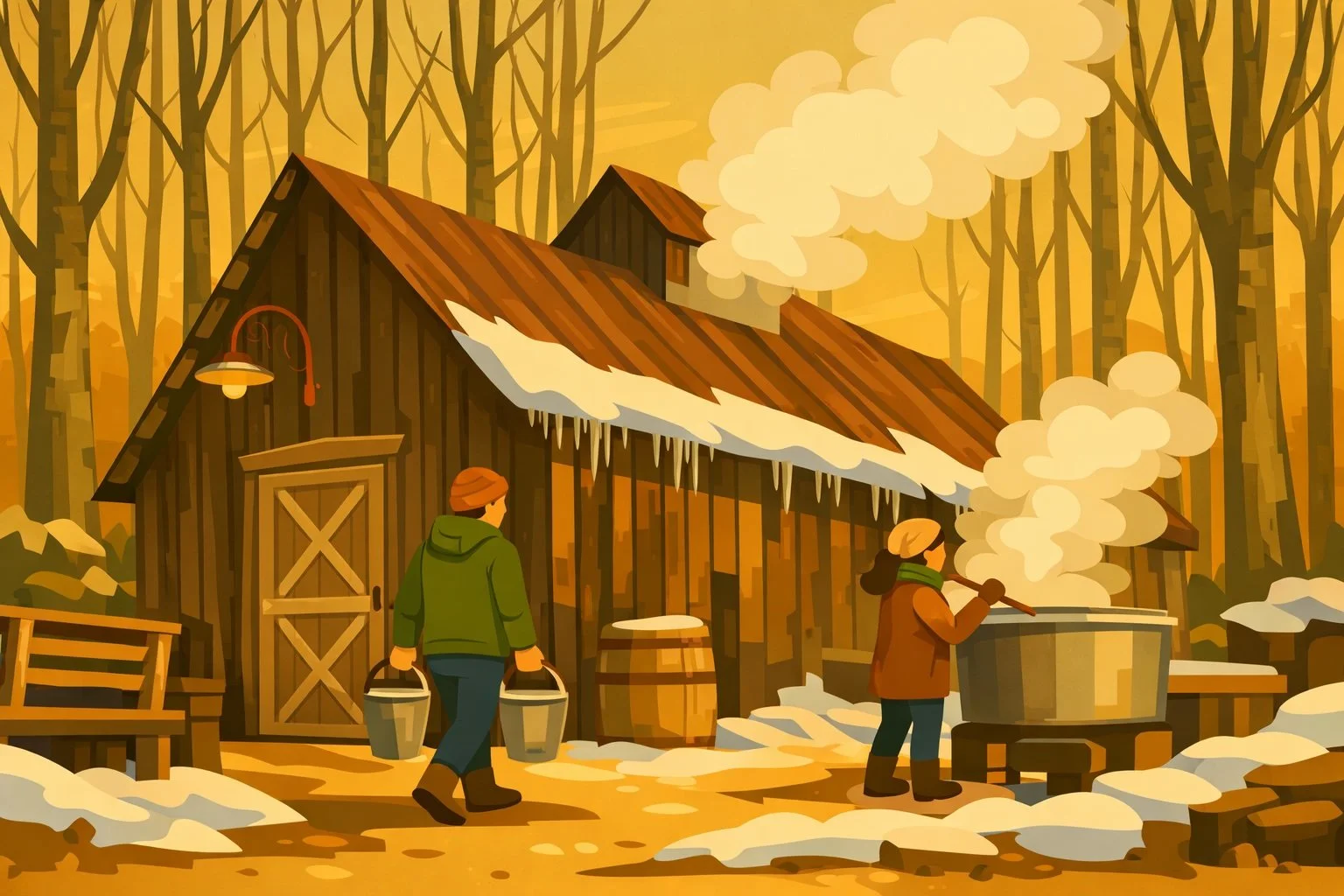
Your network's sugar shack: focusing on the essentials to extract value
If you're like me, there's a time every year when you start checking the weather differently. Not to see if you need your winter coat or your mid-season coat. No, you look at nighttime temperatures. Is it still freezing at night? Is it starting to thaw during the day?
Because you know what it means when that window opens.
Sugar season is approaching. And this year, while waiting for the first pour, I started thinking about what the maple syrup production process has in common with managing a fiber optic network. Spoiler alert: it's uncannily similar.

Is your network ready for the series? The deadline for exchanges for your 2026 deployment season
Today is March 5. In the NHL, general managers have been in quiet panic mode for several weeks. The trade deadline is tomorrow. The phones are ringing off the hook, rumors are flying, and every GM is looking at his lineup and wondering: Are we good enough to go far in the playoffs? Is there still time to find the missing piece?
Some teams have already made their smart moves. They went out and got that tough defender they've needed since October. They added a center who wins his faceoffs. They fixed their weaknesses before it really mattered.
Other teams? They hesitated too long. They said to themselves, "We're fine as we are" and now they're looking at their injury list, their power play deficiencies, and they realize that the window is about to close.
Your 2026 deployment season is exactly the same. The ground will thaw in a few weeks, construction sites will resume, and then it will be too late to go looking for missing parts. The question you need to ask yourself now is: is my team well enough equipped to perform when it counts?

Your network's spring break: when your tools work while you ski
Raise your hand if you've ever experienced this.
You're at the cottage. First real night of spring break. The kids are asleep. You finally have a drink in your hand. The fire is crackling. Outside, it's snowing softly.
Then your phone vibrates.
Major outage. 600 customers without service. Your on-call technician is in the field but can't find the information he needs. You have to guide him remotely. You spend the next two hours in the cottage kitchen, trying to remember where that cable was, in which cabinet, with which configuration.
That's what happens when your network isn't properly documented.
Now imagine the other version.
Your technician receives the call. He opens his browser, accesses Zonedge WEB from his tablet, and sees the affected segment in real time, along with all the latest network information. He knows what to do even before arriving on site. Two hours later, customers are reconnected. You haven't even left your couch.
The difference between these two scenarios is not the skill of your technician. It's access to information.

On the road to 2030: Preparing for the next cycle of your network
The Milan-Cortina 2026 Games are already over.
The flame has been extinguished, the athletes have returned home, and the podiums have been dismantled. But the most serious delegations are already sitting in a conference room somewhere, discussing the 2030 Winter Games in the French Alps. While the rest of the world watched the closing ceremony, the technical directors of the major federations were taking notes. Which young athletes deserve to be developed? Which disciplines need more resources? What lessons can be learned from this year's performances?
That's what Olympic planning is really about. It's not just about performing today. It's about building for the next four years using what we've just learned.
Your fiber optic network deserves exactly the same approach.

After the medal: Maintaining performance when the spotlight fades
Do you remember where you were when Marie-Philip Poulin scored her golden goal at the Beijing Games? That night, everyone was watching. Social media was ablaze. The spotlight was on her.
But the following week, while the rest of the country was still looking at her celebration photos on Instagram, she was already back on the ice. Training. Working. Because champions know something that everyone else forgets: the medal isn't the end. It's a starting point for the next performance.
In the world of fiber optics, we see exactly the same thing. On deployment day, everyone is excited. The mayor poses for photos. The technical team celebrates. Press releases are sent out. The spotlight shines.
But on Monday morning, the spotlight goes out. And that's when the real work begins.