

On the road to 2030: Preparing for the next cycle of your network
The Milan-Cortina 2026 Games are already over.
The flame has been extinguished, the athletes have returned home, and the podiums have been dismantled. But the most serious delegations are already sitting in a conference room somewhere, discussing the 2030 Winter Games in the French Alps. While the rest of the world watched the closing ceremony, the technical directors of the major federations were taking notes. Which young athletes deserve to be developed? Which disciplines need more resources? What lessons can be learned from this year's performances?
That's what Olympic planning is really about. It's not just about performing today. It's about building for the next four years using what we've just learned.
Your fiber optic network deserves exactly the same approach.

After the medal: Maintaining performance when the spotlight fades
Do you remember where you were when Marie-Philip Poulin scored her golden goal at the Beijing Games? That night, everyone was watching. Social media was ablaze. The spotlight was on her.
But the following week, while the rest of the country was still looking at her celebration photos on Instagram, she was already back on the ice. Training. Working. Because champions know something that everyone else forgets: the medal isn't the end. It's a starting point for the next performance.
In the world of fiber optics, we see exactly the same thing. On deployment day, everyone is excited. The mayor poses for photos. The technical team celebrates. Press releases are sent out. The spotlight shines.
But on Monday morning, the spotlight goes out. And that's when the real work begins.

The closing ceremony: Document your victories to build on your success
Watch the closing ceremony of the Olympic Games. The athletes enter the stadium, more relaxed, often laughing, taking pictures with athletes from other countries. The flags are there, the music is playing, and the results are reviewed: how many medals each country won, what records were broken, who performed above and beyond expectations.
It's beautiful to see. But behind the cameras, at the same time, something even more important is happening.
The team leaders gather their teams for debriefing. The coaches analyze the performances. The sports federations document everything: the results, the times, the tactics that worked, the mistakes to be corrected. This work is not about celebrating the medals we have just won. It is about preparing for the medals we will win in four years' time.
The delegations that succeed from one Olympics to the next are not necessarily those with the most natural talent. They are the ones that learn from each competition. That documents their processes. That builds on their successes instead of starting from scratch each time.
Does your fiber optic network learn from each project?

Bobsleigh: When your teams need to be as connected as your fibers
Have you ever watched a bobsleigh race at the Olympics? Four athletes crammed into a sled hurtling down an ice track at over 140 km/h, taking 50-degree banked turns and experiencing forces of 5G in the curves.
But what's fascinating isn't so much the speed. It's what happens in the first five seconds of the race.
At the starting signal, the four crew members must push the bobsleigh together. Not one after the other. TOGETHER. Synchronized to the millisecond. If one guy pushes a fraction of a second too early or too late, if the angle of his push is slightly different from the others, if his strength is not exactly coordinated with that of his teammates, the entire performance suffers.
After the start, it's the same. The driver makes the decisions, but what about the brakes? That's the job of the brakeman. The weight? It must be distributed perfectly according to the driver's instructions. Communication? It must be instantaneous and clear. Everyone has their role, but they must work as one.
A bobsleigh team isn't just four high-performing athletes working together. It's four people who become ONE perfectly synchronized machine.
You know what sounds a lot like that? Managing a fiber optic network with multiple teams and systems that need to work together.

Curling and your network: The long-term strategy that makes all the difference
Have you ever watched a curling match? At first glance, it looks pretty calm: players throwing stones across the ice while others frantically sweep in front of them. But if you take the time to really watch, you'll quickly realize that it's probably one of the most strategic sports out there. Each throw is planned three, four, five moves in advance. It's not just a question of strength or accuracy, it's a real game of chess on ice!
And guess what? It struck me the other day while watching the Milan-Cortina 2026 Winter Olympics: managing the architecture of a fiber optic network is exactly the same thing. Let me explain why this analogy is much more than just a comparison.

Speed skating: When every millisecond counts in your network
Have you ever watched a speed skating race at the Olympics? Those athletes hurtling across the ice at over 60 km/h, shaving millimeters off the curves, where a fraction of a second makes all the difference between gold and fourth place? Well, that's exactly what's happening in your fiber optic network every second. Except for you, it's not a medal that's at stake; it's your customers' satisfaction and the reputation of your service.
In speed skating, it's all about pure performance. No frills, no artistic flourishes, just the fastest possible race from point A to point B. For your fiber optic network, it's the same thing: your data must travel as quickly as possible, with as little friction as possible, and you must be able to track every millisecond of its journey.

Cross-country skiing: The endurance needed to manage a network over the long term
You know what doesn't make the headlines at the Olympics? Cross-country skiing.
Watch the sports highlights after a day of competition. You'll see the alpine skier who raced down the slope at 130 km/h. You'll see the spectacular ski jump. You'll see the hockey player who scored the winning goal in overtime.
What you probably won't see is the cross-country skier who has just covered 50 kilometers in two and a half hours of constant effort. No dizzying descents. No impressive jumps. Just an athlete maintaining a steady pace, kilometer after kilometer, climb after climb, for hours on end.
It's not sexy. It doesn't make for great action photos. But it's probably the most physically and mentally demanding Olympic event.
You know what sounds a lot like that? The ongoing maintenance of a fiber optic network.

Alpine skiing: Descending the mountain of data without losing control
Have you ever watched an Olympic downhill skiing event? These athletes race down the mountain at speeds of over 80 miles per hour. They pass within inches of the gates, take sharp turns on ice, and jump over bumps that propel them several feet into the air.
And throughout all this, they must remain in complete control. One small movement too many, a split second of hesitation, a bad angle in a turn, and it's a disaster. They veer off course, miss a gate, lose precious seconds that make the difference between gold and fifth place.
Alpine skiing is the art of combining maximum speed and absolute control. It's not one or the other, it's both at the same time.
You know what sounds a lot like that? Dealing with a major outage on your fiber optic network.
You have 500 customers without service. Your phone is blowing up with calls. Your support team is panicking. Your bosses want answers now. You have to act FAST. But if you lose control, if you go off in all directions, if you miss a crucial detail, you'll just make the situation worse.
It's just like hurtling down a ski slope. You have to go fast, but you have to stay in control.

The coaches behind the champions: The crucial role of technical support
When you watch an athlete climb onto the Olympic podium, what do you see? You see the athlete. The champion. The person who has just won the gold medal after an exceptional performance.
But you know who you don't see? The coach who spent four years perfecting every detail of the technique. The physical therapist who prevented and treated a dozen potential injuries. The performance analyst who studied hundreds of hours of video. The nutritionist who optimized every meal. The sports psychologist who worked on mental preparation.
All these people don't get on the podium. They don't appear in the highlights on TV. But without them, there would be no medals.
A world-class Olympic athlete without a strong technical staff is like trying to manage a fiber optic network with a powerful GIS but no technical support. Technically, you have the tool. But when things get complicated, when you have a question, when you want to optimize your approach, you're on your own.

The kickoff meeting: Why a good start to a project is worth its weight in gold
Do you remember the opening ceremony of the 2010 Vancouver Olympics? The moment when one of the four pillars of the Olympic torch refused to rise? It only lasted a few seconds, but it created an awkward moment in front of millions of viewers. Despite years of preparation and hundreds of rehearsals, a small technical detail almost stole the show from the entire ceremony.
Fortunately, the team had a backup plan. Catriona Le May Doan was still able to light the indoor Olympic flame later that evening. But imagine if they hadn't planned for this contingency. Imagine if the entire ceremony had been derailed because of this technical glitch.
This is exactly what happens too often with fiber optic deployment projects.

The Olympic Village: When all your data needs to live in one place
Imagine the Winter Olympics without an Olympic Village. The 3,000 athletes scattered across 50 different hotels throughout the city. Alpine skiers staying in Cortina, skaters in Milan, hockey players somewhere in between. Each in their own bubble, with their own schedule, their own cafeteria, their own gym.
That would be a monumental logistical nightmare, right?
Coaches would waste half their time just trying to find their athletes. Physios would have to lug their equipment from hotel to hotel. Forget team coordination, you'd have a hard time just getting everyone together for an official photo.
That's exactly why the concept of the Olympic Village has existed since 1932. Everyone in one place. A shared infrastructure. A single source of truth for knowing who is where, who is doing what, and who needs what.
However, when I look at how most fiber optic network managers handle their data, it's exactly like the chaos before the Olympic Village was invented. Data scattered across 15 different systems, conflicting versions of the same plan, critical information lost in emails or in the head of Bob, who just left on vacation.
Your network deserves better. It deserves its own Olympic Village.

Selecting the national team: Choosing the right tools for your network
Imagine yourself in the shoes of Team Canada's chef de mission for the Winter Olympics. You have a limited budget, dozens of athletes who deserve their place, and you have to put together a delegation that will perform in fifteen completely different disciplines. You're not going to send a hockey player to do freestyle skiing, or ask a figure skater to do bobsleigh, right?
Yet this is exactly what most fiber optic network managers do.
They try to manage their infrastructure with tools that were never designed for that purpose. Excel here, AutoCAD there, Google Maps to find their location, maybe an old management system dating back to the days of copper networks. It's like putting together an Olympic team with only hockey players and asking them to win medals in every discipline.

Altitude training: How to prepare your infrastructure before the high season
Do you know where the world's best cross-country skiers spend their summers? Not on beaches sipping cocktails, that's for sure.
They are at an altitude of 2,500 meters in the Alps or the Rockies, training in conditions that make every effort twice as difficult. The air is thinner, oxygen is scarce, and even the slightest sprint becomes an ordeal. They deliberately push their bodies in conditions that are much tougher than those they will encounter in competition.
Why? Because when you train at altitude, when you come back down to sea level to compete, your body is overtrained. What was difficult at altitude becomes manageable in competition. You've created a safety margin. You've prepared your body for the worst, so "normal" seems easy.
This is exactly the philosophy you should apply to your fiber optic network before the peak deployment season.
Too many operators wait for the first real project of the summer to test their processes, tools, and team. It's like an athlete doing their first serious training session on the morning of the competition. Technically possible, but definitely not ideal.
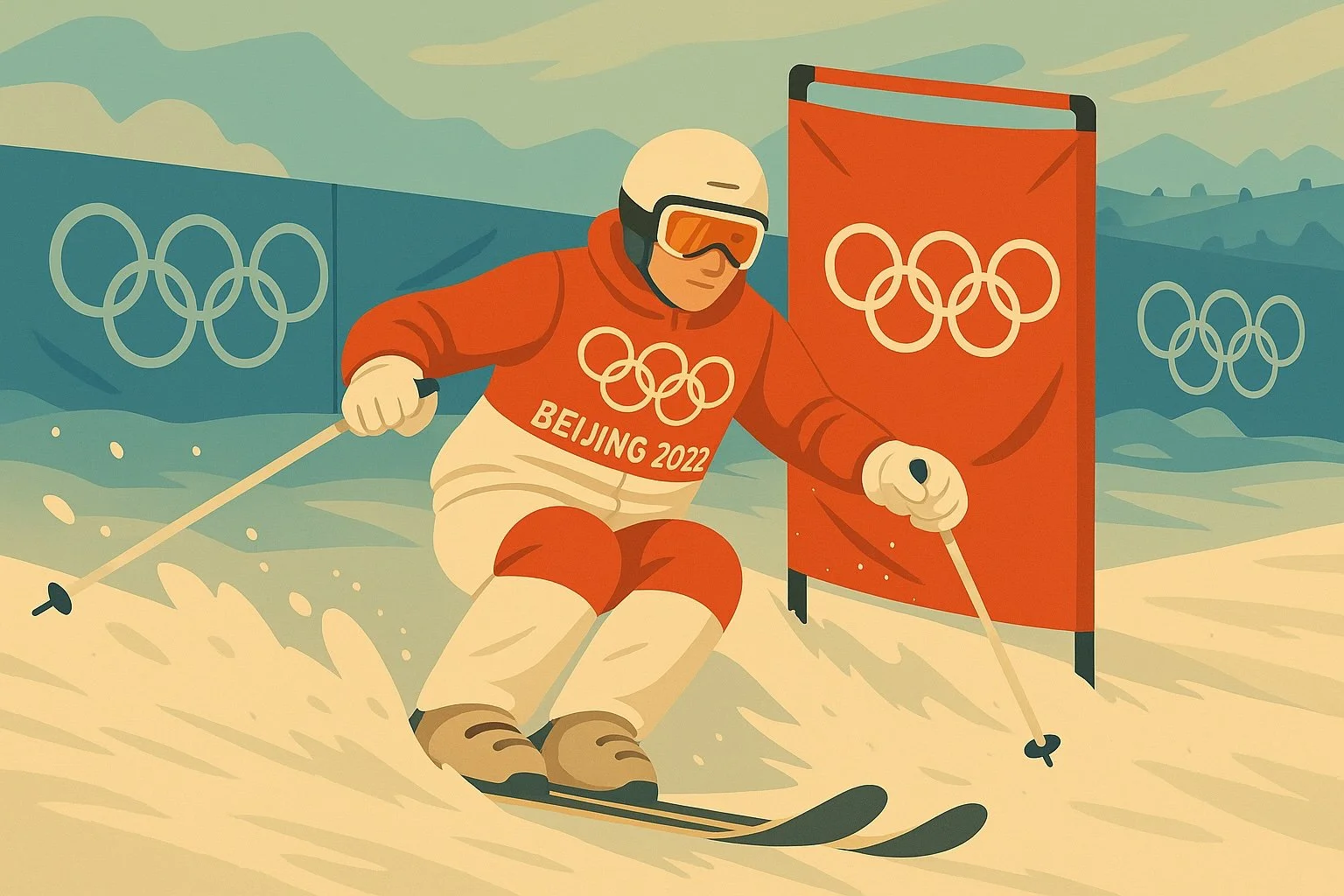
The 4-year Olympic cycle: Why your fiber network deserves the same planning as an Olympic athlete
When you watch athletes perform at the Olympics, you think, "Wow, how do they get so good?" You see them hurtling down a hill at 130 km/h, landing a perfect triple axel, or crossing the finish line three seconds ahead of their rivals. It looks so easy, so natural.
But here's the thing: that "ease" you see is the result of four years of hard work. Four years of meticulous planning, daily training, and sacrifice. Thousands of hours invested for a moment of glory that will last minutes, sometimes seconds.
And do you know what? Managing a fiber optic network is exactly the same.