
Your network's spring break: when your tools work while you ski
Raise your hand if you've ever experienced this.
You're at the cottage. First real night of spring break. The kids are asleep. You finally have a drink in your hand. The fire is crackling. Outside, it's snowing softly.
Then your phone vibrates.
Major outage. 600 customers without service. Your on-call technician is in the field but can't find the information he needs. You have to guide him remotely. You spend the next two hours in the cottage kitchen, trying to remember where that cable was, in which cabinet, with which configuration.
That's what happens when your network isn't properly documented.
Now imagine the other version.
Your technician receives the call. He opens his browser, accesses Zonedge WEB from his tablet, and sees the affected segment in real time, along with all the latest network information. He knows what to do even before arriving on site. Two hours later, customers are reconnected. You haven't even left your couch.
The difference between these two scenarios is not the skill of your technician. It's access to information.
Your network never takes a break.
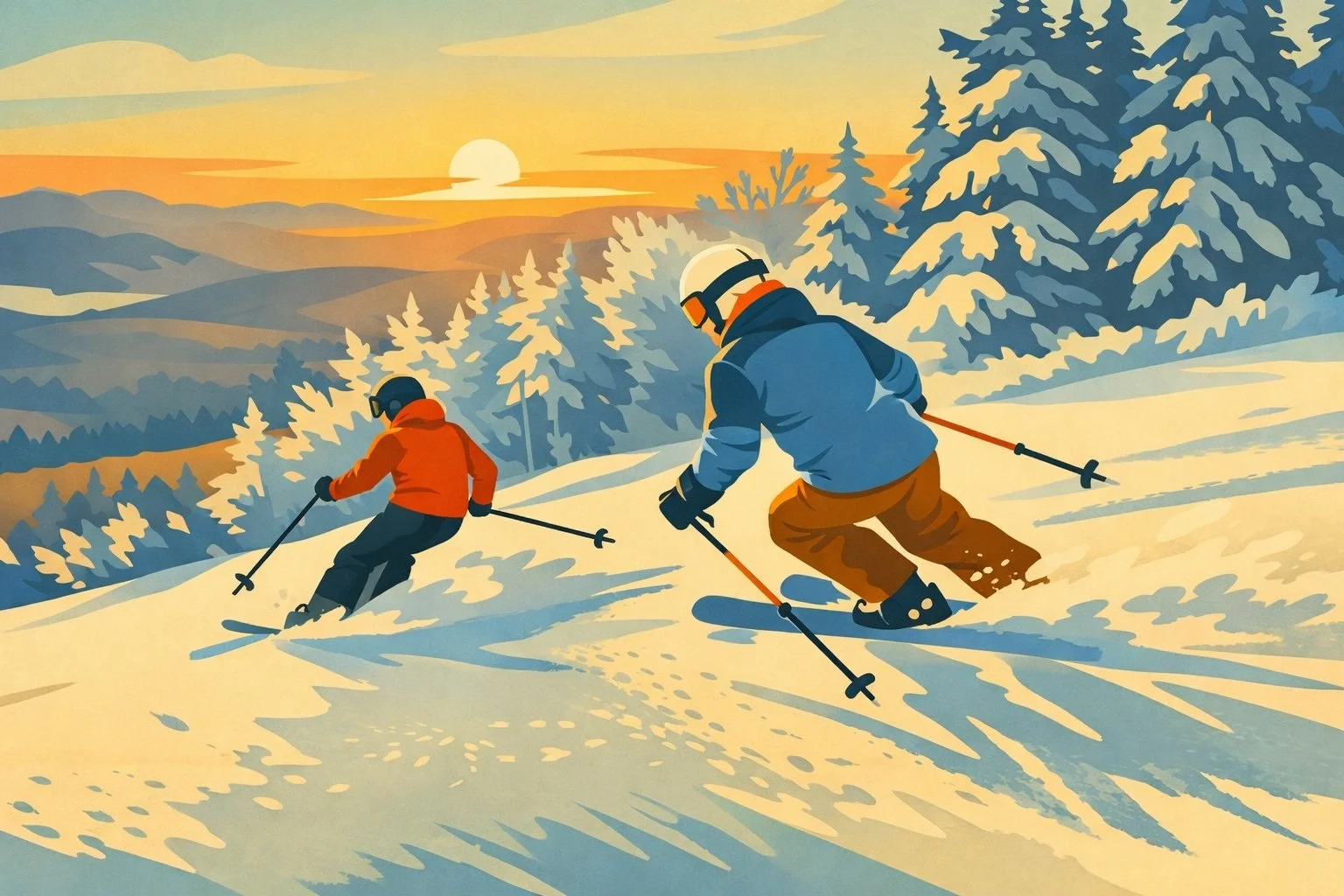
While Canadian families are lacing up their skis this week in March, data continues to travel. Emergency calls are still being made. Bank transactions are still going through. Students taking advantage of spring break to binge-watch Netflix on their home fiber connections... well, they're still watching.
Your network never takes a vacation. Ever. 365 days a year, 24 hours a day, thousands of connections, hundreds of kilometers of cables underground, on poles, in conduits that you have documented... or maybe not so much.
And that's where it gets interesting.
Because spring break, in terms of network management, is exactly that: are you the manager who can leave with peace of mind, with the right tools and the right information accessible to your entire team, or are you the one who remains mentally "on call" even with skis on your feet?
The prepared cottage vs. the improvised cottage
A well-managed cottage requires advance preparation. Before leaving, you do a check: supplies, the condition of the roof, the heating system, spare snowshoes. You know exactly what you have, where it is, and what condition it's in. If something breaks, you know where the maintenance manual is kept. You even have an emergency plumber's number in your phone, just in case.
The improvised cottage? We all know how that goes. We arrive, hope everything works, improvise when it doesn't. And we spent half the vacation dealing with things that could have been planned for.
A fiber optic network is exactly the same.
Managers who have complete, up-to-date documentation and know exactly where every fiber, every splice, every box, and every connected customer is located; they can truly relax. When something happens, their team has the information they need, no matter where they are. No need to call the boss.
The others? They spend their weekends answering calls from the kitchen of the cottage.
The ski slopes of your data
Think of it as the slopes of a ski resort.
A well-managed mountain is a mapped mountain. Every trail is marked, every level of difficulty is clearly indicated, and every danger zone is marked. Patrol officers know exactly where to go when someone needs help. The mountain manager can see the status of the entire ski area at a glance, from his office, from his phone, no matter where he is.
Your fiber optic network is your mountain.
And the map of that mountain, in our world, is called the digital twin of your network. It is a virtual replica, accurate and alive, of every cable, every distribution cabinet, every splice, every customer connected to your real infrastructure. Not just a plan lying around on a server somewhere, a faithful portrait of your network, which updates itself as work is done, reflecting the reality on the ground at all times.
Zonedge GIS is where this digital twin comes to life. Your engineers and planners build and maintain the complete map of your network with tools designed specifically for fiber optics.
But a digital twin that remains locked away in an engineer's workstation in the office is like a mountain map that the manager keeps in his office while the patrol officers are out on the slopes. The information is there, but it's of no use to anyone.
Zonedge WEB: your network in your pocket, wherever you are
This is where Zonedge WEB changes the game.
Zonedge WEB provides universal access to your digital twin. No need for specialized software, no need to be at the office in front of your workstation. Anyone in your organization, the manager at the cottage, the supervisor on the road, the director in a meeting across the country, can access complete, up-to-date information about your network from a simple web browser.
That's the real power of a digital twin: it's only useful if it's accessible.
Imagine your technical director having to manage a crisis situation from Tremblant. With Zonedge WEB, he opens his phone and sees exactly which segment is affected, which customers are impacted, and the technical information his team needs. He can annotate, comment, and coordinate, all in real time, from anywhere, without ever opening a computer.
It's not magic. It's simply well-organized information, made accessible to your entire team.
Meanwhile, your field technicians validate and update this digital twin via Zonedge TERRAIN, even in areas without connectivity. As soon as they regain signal, everything synchronizes. Your network portrait remains true to reality at all times.
One source of truth. Accessible to everyone. Continuously updated.
The mountain you don't know is dangerous.
We often hear this phrase in ski resorts: "Ski within your abilities and on slopes you know."
Why? Because a mountain you don't know is a mountain that can surprise you. A hidden turn. A bump you don't see coming. A valley floor where the snow is different.
A network that you don't document is the same thing. A fiber that was temporarily repaired two years ago and never properly documented. A cable that was reused without being updated in the system. A new customer connected on an emergency basis whose file is still in an email from 2023.
These little oversights add up. And they always end up popping up at the worst possible moment.
The good news is that a well-maintained digital twin is exactly the antidote to this problem. Every intervention documented in the system is reflected in the overall picture of your network. You know your mountain inside out, and so does your entire team, no matter where they are.
How to take a real break this year
I'll be blunt with you: if you find it difficult to disconnect from your network, if you're afraid of what might happen while you're away, if your team still relies on your memory or the files on your workstation to find information, that's a clear sign.
It's not that you're incompetent. It's that you deserve better tools.
The real relief for a fiber optic network manager is knowing that no matter where your team is, in the field, in the office, or working remotely, everyone is working with the same, up-to-date information, accessible in just a few clicks. That's the promise of a well-deployed digital twin with Zonedge WEB as the universal gateway.
At Zonedge, we built our three applications, GIS, WEB, and TERRAIN, around a single goal: to enable you to manage your fiber network with confidence. Not with hope.
Because hope is not a networking strategy.
And you really deserve this week off.
Curious to see what a digital twin accessible to your entire team via Zonedge WEB actually looks like? Request a demo, we'll show you your mountain mapped out, and how everyone can access it, no matter where they are.