
The digital twin: Your network has a duplicate, and that’s good news
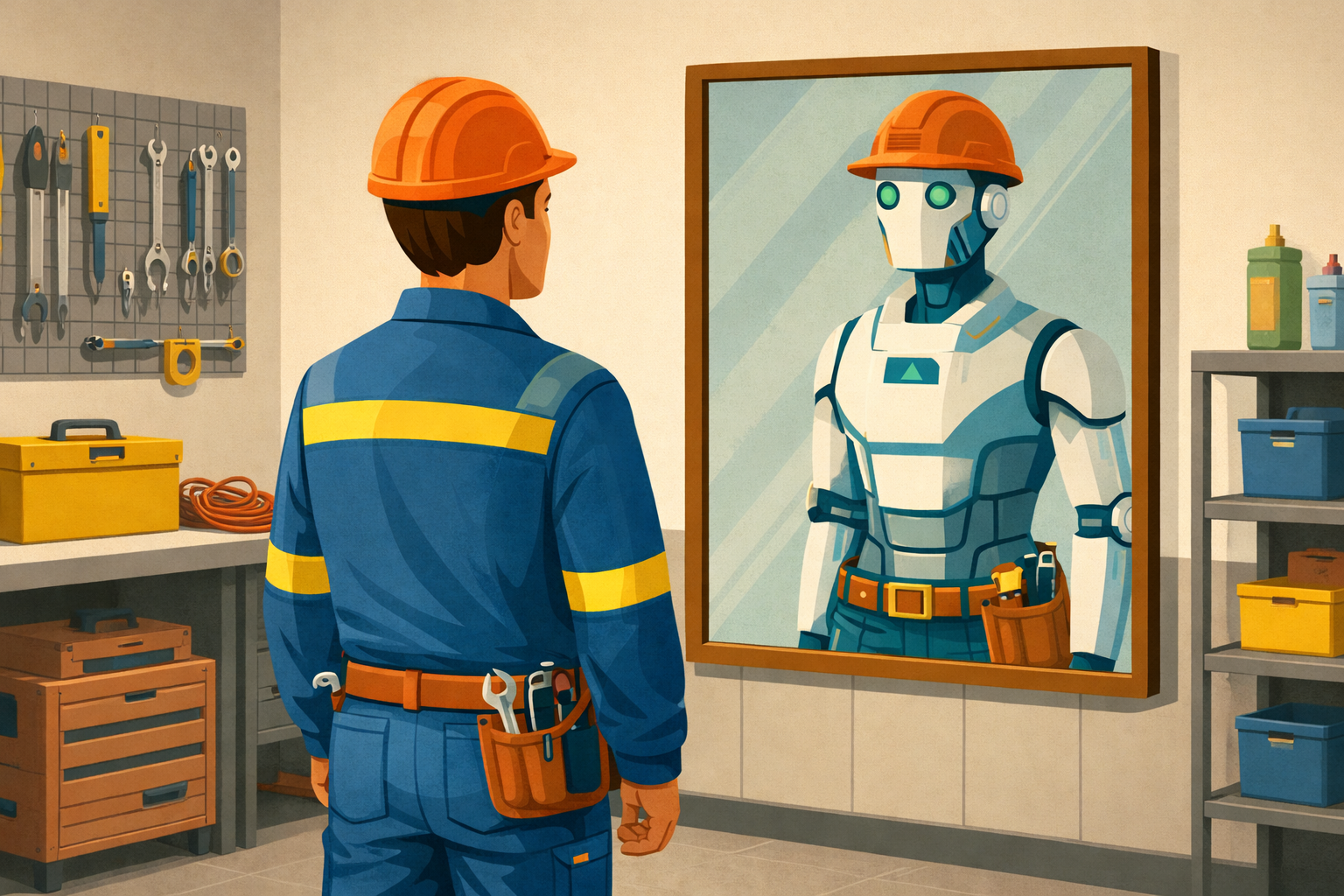
Have you ever imagined this? You have a perfect duplicate somewhere that knows exactly where every cable runs, how many customers are connected, what equipment is installed where, and the complete history of all your work. This isn’t science fiction, it’s exactly what a digital twin can do for your fiber-optic network.
Except that your doppelganger doesn't live in a parallel universe; he lives on your computer. Unlike your imaginary counterpart, he works around the clock to make your life easier.
A digital twin? It's not just a fancy PDF
Let’s get one thing straight: a digital twin isn’t that outdated AutoCAD drawing of yours that’s been sitting there since 2017, nor is it that massive Excel file with 50 columns that nobody can make sense of.
A true digital twin is like having a continuous video feed of your network that records everything. A new fiber connection is added? It’s noted. A splice is repaired? It’s recorded. A customer connects? Everything is documented in real time.
It is a live replica of your physical infrastructure. "Live" because it evolves at the same pace as your actual network in the field.
Three ingredients for a successful digital twin
Well, if a digital twin isn't just a collection of data, what exactly makes it so special? Three simple things, really:
First, location. That means: where is it? Where exactly does this cable run? Between point A and point B? Your digital twin knows all of this, with surgical precision, thanks to your geospatial data.
Next, the properties. These are the characteristics of each component: How many fibers does this cable have? What brand is this equipment? What is the diameter of this conduit? Every little detail that makes your infrastructure unique is recorded.
And finally, the connections. That’s where it really gets powerful. How is everything interconnected? Which customers are connected to which distribution box? Which fiber in which cable runs to which POP? That’s the intelligence of the system.
Add to that constant, real-time updates of all that data, and boom, you’ve got a digital twin that breathes with you.
Okay, so how does that change my daily life?
Let’s say it’s Monday morning. One of your customers calls you, completely furious because their internet hasn’t been working since Saturday night. With a true digital twin, you don’t panic. You don’t spend 45 minutes digging through your files. No. You open your system, click on the customer’s address, and in two seconds, you see the entire path of their fiber: exit from the POP, transport cable on Main Street, junction here, distribution there, all the way to their home. You can diagnose the problem without setting foot outside.
And that’s not even getting into the real power of it. Imagine it’s Wednesday, and you need to schedule maintenance that will affect 200 customers. Instead of racking your brain trying to figure out who’s connected where, your digital twin generates a complete list in 30 seconds. You send out a proactive notification to everyone. Your customers love it. Your teams love it. Your boss loves it.
The real problem with older tools
It's kind of funny, but before digital twins, fiber-optic companies were doing something crazy: they kept information scattered all over the place. A blueprint here, a spreadsheet there, site photos on someone's phone, equipment diagrams somewhere else. It was an organized mess, but a mess nonetheless.
Worse than that? These systems never communicated with each other. Your AutoCAD drawing didn’t know how many customers were actually connected. Your Excel spreadsheet didn’t know where the cable actually ran. It was like having a jigsaw puzzle where all the pieces exist, but they never fit together.
With a digital twin, you have a single source of truth. Everything is connected, literally. When you make a change in one place, everything else updates automatically.
The benefits that really make a difference
First, the savings. You stop paying for fiber you didn’t even know you had. You optimize your facility lease agreements. Your field teams stop getting lost.
Next, efficiency. Repairs that used to take a day? Now they take three hours. Diagnostics that used to take two days? Now they take 15 minutes.
Customer satisfaction. Your customers love being notified before any changes are made to their service. Your digital twin allows you to provide precise answers.
And internal trust. Your office and field teams are finally working with the same information. Your managers make decisions based on real data.
When complexity becomes an advantage
The larger your network grows, the more obvious the importance of a digital twin becomes. Once you reach a certain scale, you can no longer manage it with paper plans. It all falls apart.
But with a digital twin, complexity becomes your advantage. Do you have 500 customers to connect? Your system knows what’s available. Need to sell fiber to a competitor? It takes just two minutes to see what you can offer.
It's not an investment; it's a necessity
Operators who have figured this out are staying ahead of the curve. The others are playing catch-up. It’s not just because it’s technically fancy, it’s because a digital twin aligns your entire organization around a single version of the truth.
Your manager knows where the money is coming from. Your engineer can plan without making assumptions. Your technician has all the information they need. Everyone wins.
And it's not hard to set up
You might think that turning all your plans, all your data, and your entire history into a digital twin would take years and a team of 50 people. Nope.
With the right tools, and that’s exactly what Zonedge was designed to do, you can take your existing plans, Excel files, and even your old sketches on napkins, and turn them all into a coherent and functional digital twin. In just a few weeks.
And once it's up and running, it doesn't take much effort to maintain. Every change, every project, every repair, everything is automatically updated in your twin.
The network you deserve
At the end of the day, that’s what a digital twin is all about: giving your network the recognition it truly deserves. It means stopping the haphazard management of your network using broken tools that don’t communicate with each other.
It means giving your teams the information they need to excel. It means providing your customers with quality service because you truly understand what’s happening within your infrastructure. It means giving your business the data it needs to make smart decisions.
Your network now has a twin. And that's definitely good news.
Do you have a fiber-optic network and are you tired of juggling 47 different files? Let’s talk. At Zonedge, we know how to create digital twins that actually work.
