
Is your network ready for the series? The deadline for exchanges for your 2026 deployment season
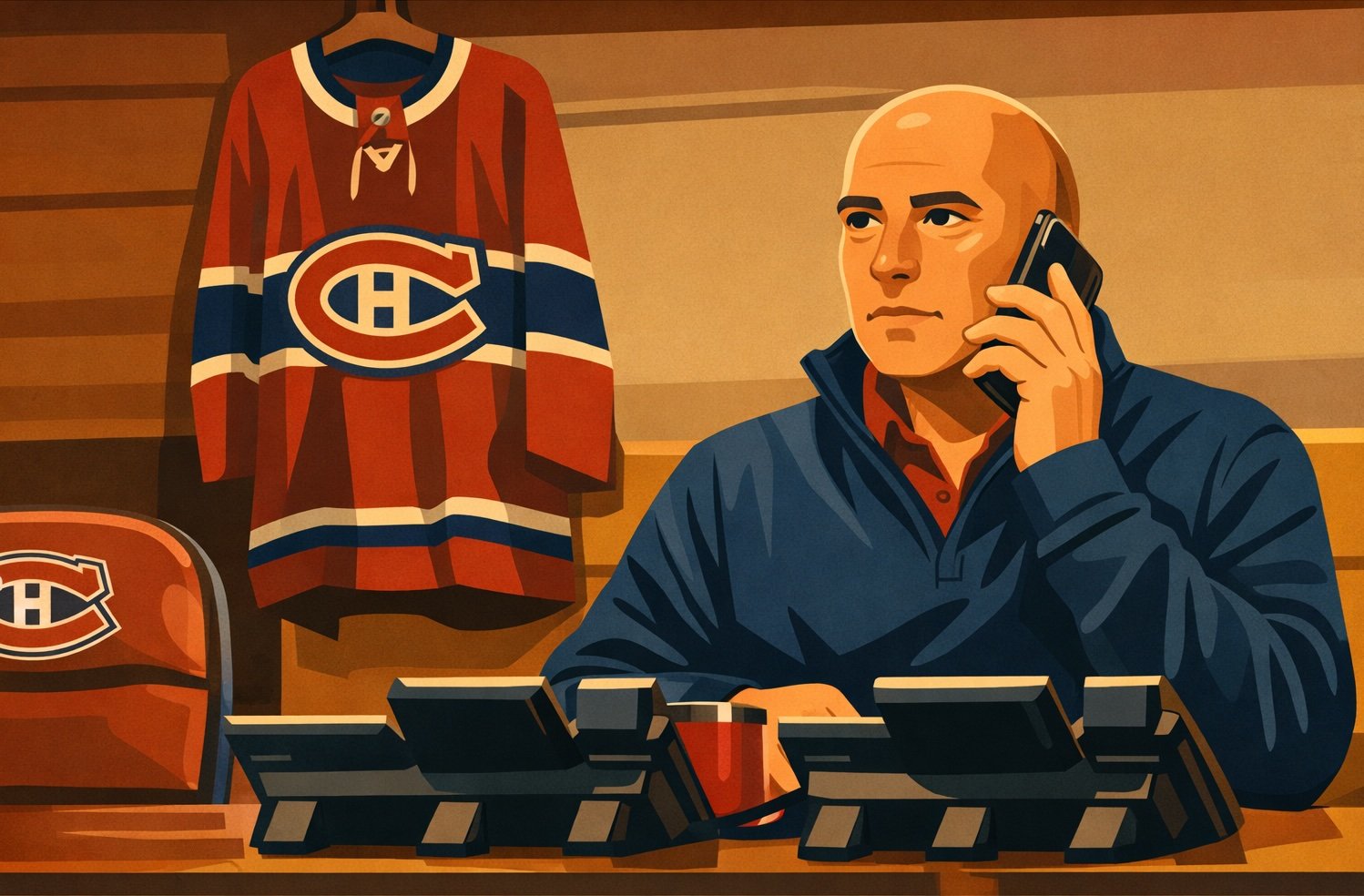
Today is March 5. In the NHL, general managers have been in quiet panic mode for several weeks. The trade deadline is tomorrow. The phones are ringing off the hook, rumors are flying, and every GM is looking at his lineup and wondering: Are we good enough to go far in the playoffs? Is there still time to find the missing piece?
Some teams have already made their smart moves. They went out and got that tough defender they've needed since October. They added a center who wins his faceoffs. They fixed their weaknesses before it really mattered.
Other teams? They hesitated too long. They said to themselves, "We're fine as we are" and now they're looking at their injury list, their power play deficiencies, and they realize that the window is about to close.
Your 2026 deployment season is exactly the same. The ground will thaw in a few weeks, construction sites will resume, and then it will be too late to go looking for missing parts. The question you need to ask yourself now is: is my team well enough equipped to perform when it counts?
The series is won before the first game
What great general managers understand, and others often forget, is that series aren't won just on the ice. They're won in the weeks leading up to them. In the decisions made when there's still time to make them.
A team that enters the playoffs with known weaknesses spends the entire season trying to hide them instead of performing well. The coach works miracles, the players compensate, but the underlying problem remains. One mistake, one bad night, and the weaknesses resurface.
That's exactly what happens with field teams that start a deployment season with incomplete documentation, disconnected tools, and information that dates back to last fall. You'll manage. Your technicians are good. But you'll spend the summer compensating for problems you could have solved in March.
Do your replanting before the ground thaws.
A good CEO before the deadline makes an honest assessment of his team. He doesn't just look at the strengths, he looks at the gaps. What's missing. What will hurt them if it comes at the wrong time.
Do the same exercise for your network.
First gap to identify: is your documentation up to date?
Every fall leaves behind interventions that have never been properly documented. Technicians who took photos with their personal phones. Last-minute changes that remained in the team leader's head but never made it into the system. As-built drawings that reflect the network as it was planned, not as it was built.
This is the first thing you need to do before the series. With Zonedge TERRAIN, this reality changes completely: photos are automatically geotagged and linked to the right items as soon as they are taken in the field, even without an internet connection. When the technician leaves the site, the information is already in the system. Not on their phone. Not in a folder somewhere. In the system.
If your teams didn't work that way last fall, you still have time to review and correct the situation before the season starts again.
Second hole: Is everyone playing on the same team?
A playoff team doesn't work with the fourth line doing its own thing in the corner. Everyone follows the same game plan, everyone sees the same information.
In the reality of many network operators, the office works with its GIS plans while field teams have printed PDFs that are a month old. The supervisor has one version, the technician has another, and when there is a conflict between the two, time is lost, and sometimes mistakes are made.
That's precisely why we built Zonedge around a single source of truth. A plan created in Zonedge GIS is instantly visible in Zonedge WEB for supervision, and field teams see the same updated information on their tablets via Zonedge TERRAIN. Everyone is on the same page. All the time.
Third hole: Are your new recruits ready?
Staff turnover in the industry is a reality. There is a good chance that you will have technicians working their first season with you this summer. New recruits arrive full of enthusiasm but are not yet familiar with your systems, processes, or documentation methods.
A center player who is acquired just before the trade deadline is of no use if you explain the game system to him on the night of the first playoff game. It takes time. It takes preparation.
March is your training camp. Train your new recruits on Zonedge TERRAIN while we're not yet in the middle of the busy season. A technician who understands how to collect field data, how to work offline and synchronize, how to attach photos and validate inventory directly on site, that's a technician who will save you hours of administrative corrections this summer.
Fourth hole: Do you know where you'll be playing this season?
A good GM before the playoffs doesn't just know who's on his roster, he knows who he's going to play against, on what ice, and in what context. He has analyzed the opponents and prepared his systems accordingly.
Your version of this is to look at your saturation and penetration data before the projects start. Which areas are approaching maximum capacity? Where is the penetration rate below expectations? Which segments should be prioritized this year?
In Zonedge WEB, these analyses are accessible directly from your actual data. You can see saturation maps, penetration statistics, and a detailed inventory of your network. You make decisions based on facts, not impressions. And you arrive in April with a precise game plan instead of improvising.
The deadline for exchanges is tomorrow. Your preparation window is still open.
In the NHL, March 6 at 3 p.m. is the deadline. The roster is set. You can no longer go out and get the defenseman you're missing or the backup goalie you need. GMs who hesitated will have to live with their decisions, or lack thereof, until the end of the playoffs.
Fortunately, your deployment season isn't quite the same. The preparation window is still open, but it's closing fast. In a few weeks, the ground will thaw, calls for tenders will be issued, and your teams will be in the trenches. That's when you'll be glad you made your moves in March.
The teams that will perform well this summer are those that use this time wisely. Those that take stock of their shortcomings while there is still time to address them. Those that ensure their documentation is solid, their teams are trained and synchronized, and their deployment plans are already in the system before the first shovel hits the ground.
At Zonedge, we have been working with network operators for over 15 years. And what we have learned is that the difference between a smooth season and a chaotic one is rarely played out on the ice, it is played out in the preparation that comes before.
Want to see how Zonedge can help you get to April with complete alignment and a game plan in hand? Request a demo. We'll show you exactly what that looks like for your network.
Because the series are won before the first game. And the deadline is approaching.