
The 4-year Olympic cycle: Why your fiber network deserves the same planning as an Olympic athlete
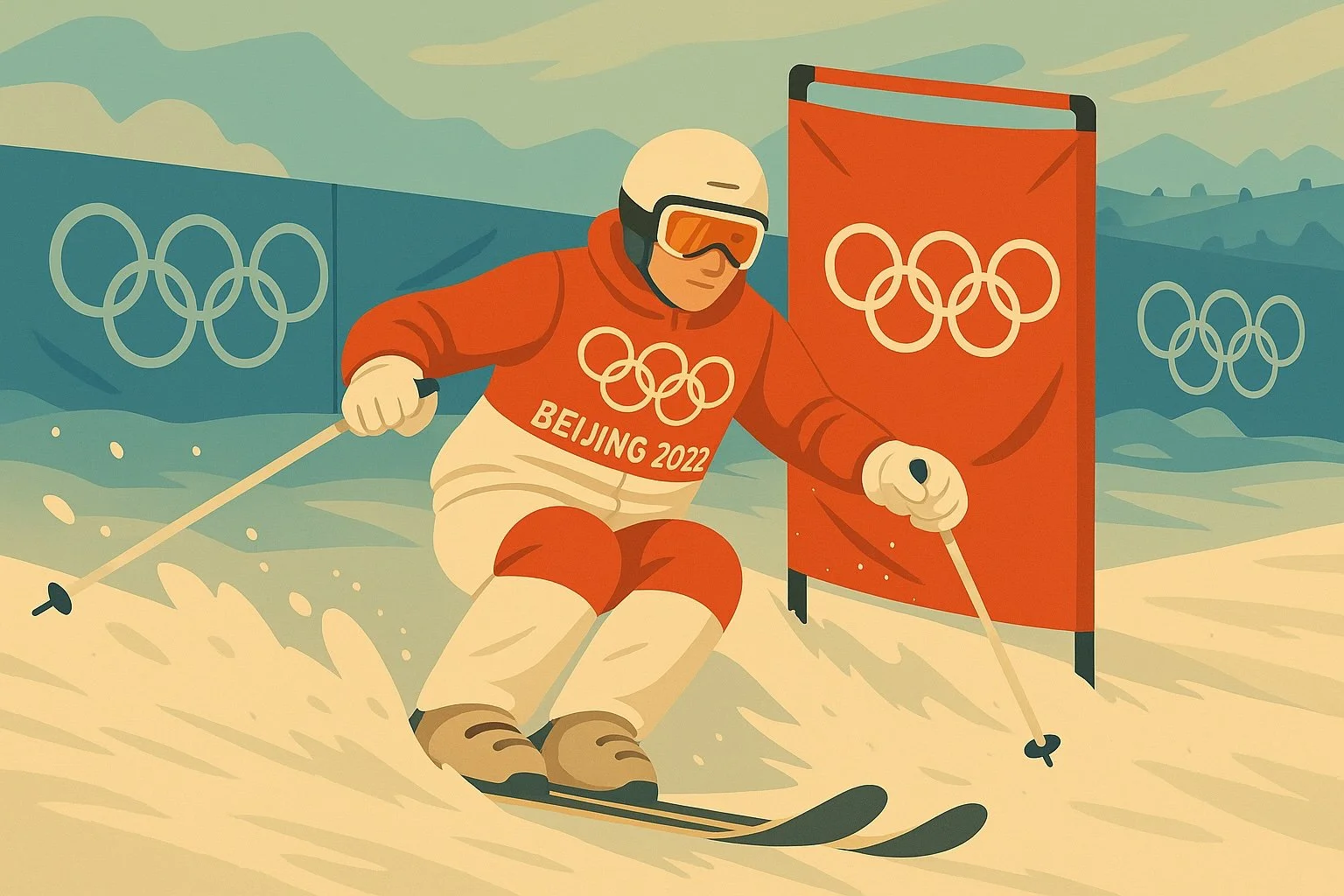
When you watch athletes perform at the Olympics, you think, "Wow, how do they get so good?" You see them hurtling down a hill at 130 km/h, landing a perfect triple axel, or crossing the finish line three seconds ahead of their rivals. It looks so easy, so natural.
But here's the thing: that "ease" you see is the result of four years of hard work. Four years of meticulous planning, daily training, and sacrifice. Thousands of hours invested for a moment of glory that will last minutes, sometimes seconds.
And do you know what? Managing a fiber optic network is exactly the same.
I know, I know... you may be thinking, "Come on, comparing my telecom network to an Olympic skier?" But stick with me for two minutes, because this analogy will make you see your infrastructure in a completely different light.
The myth of spontaneous performance
When you watch an Olympic athlete cross the finish line first, it looks easy. Smooth. Natural. But in reality, this "spontaneity" is the result of meticulous planning that began four years earlier, right at the end of the previous Games.
It's the same with your fiber optic network. Your customers just see their connection working. They click, it works. End of story. But you know what's behind it: hundreds of hours of planning, deployment, optimization, and maintenance.
The problem is that all too often, we manage our networks in reactive mode. We wait until there's a problem before taking action. It's like an Olympic athlete deciding to start training six months before the Games. That might work for a local race, but at the Olympics? Not a chance.
The four phases of the Olympic cycle (and your network)
Olympic athletes divide their preparation into well-defined cycles. And guess what? Your fiber network should follow the same logic.
Year 1: Reconstruction and analysis
Right after the Games, athletes take a step back. They analyze what went right, what went wrong. They identify their weaknesses and build a plan for the next four years.
It's time to do the same for your network. After a major deployment or at the start of the fiscal year, take the time to really look at your data. Where are the bottlenecks? What areas have caused the most headaches? What documentation is missing?
It's also time to invest in your tools. An athlete doesn't go to the Games with old, worn-out skates. He buys the best possible equipment. Your GIS, your management tools, your documentation, that's your Olympic equipment. If you're still working with scattered Excel spreadsheets and AutoCAD plans from 2015, you're shooting yourself in the foot before you even get started.
Year 2: Development and expansion
This is the year when athletes build their base. They increase their training load, develop new techniques, and test different approaches.
For your network, it's strategic expansion time. Identified your weaknesses last year? Now you're correcting them. You're extending your coverage, optimizing your processes, training your team in new procedures.
It's also the perfect time to standardize your operations. An Olympic athlete has a well-honed training routine; he doesn't reinvent the wheel every morning. The same goes for you: your deployment procedures, your documentation methods, your maintenance protocols, all should be standardized and accessible to the whole team.
Year 3: Optimization and refinement
Athletes enter their phase of specialization. They perfect their techniques, eliminate unnecessary movements, and optimize every detail.
For your network, it's time for fine-tuning. You've got a solid base? Perfect. Now it's time to fine-tune. Analyze traffic patterns, optimize routes, improve response times. We make sure that every connector, every splice, every segment is documented to perfection.
This is also the year when you should really exploit the data you've accumulated. An athlete uses sensors, video analysis, and detailed statistics to improve his performance. You should do the same with your network. Data isn't just for pretty faces in a report, it's for making informed decisions.
Year 4: Final preparation and performance
It's the Olympic year. Athletes are maintaining their level, avoiding injury and concentrating on mental preparation. They don't take unnecessary risks.
For your network, it's time to consolidate. No major changes for no reason. You make sure everything is stable, your team is ready, your documentation is up-to-date. You prepare your contingency plans, because if something goes wrong, you want to be ready to react quickly.
The difference between reacting and planning
Here's the real difference between an Olympic network and a survival network: proactive planning versus constant reaction.
An athlete preparing for the Games knows exactly where he wants to be in six months, a year, two years. He has measurable objectives, clear milestones, and a detailed action plan.
Compare this to a network managed in firefighter mode: fires are put out as they appear, without ever taking the time to ask why there are so many fires. You fix the broken cable, you fix the fault, you respond to the customer's complaint. But we never ask ourselves, "How can we prevent this from happening next time?"
Olympic planning is exactly the opposite. It means asking yourself: "In four years' time, how do I want my network to perform? What do I need to put in place now to get there?"
Tools for the networked Olympic athlete
An Olympic athlete could never perform without the right tools: state-of-the-art equipment, data analysis, the support of a complete team. Your network is no different.
A specialized GIS like Zonedge is your Olympic gear. It's not just a "nice to have" - it's the difference between performing at Olympic level and fighting with tools that weren't designed for your reality.
Think about it: an Olympic skier would never use rental skis from the local convenience store. He has equipment designed specifically for his discipline, adjusted precisely to his needs and meticulously maintained.
Your fiber network deserves the same approach. A generic GIS is like rental skis: it might do the job for the occasional run, but for top-level performance? Forget it.
The cycle never stops
Here's what Olympic athletes understand, and what many network operators forget: the cycle never ends. The Games end, and the next day, preparation for the next Games begins.
Your network is no different. Have you just completed a major deployment? Perfect. Now's the time to start planning the next one. You've solved all your documentation problems? Great. Now, how are you going to keep it up to date?
Olympic performance isn't a sprint, it's a marathon. Or rather, it's a series of marathons, one after the other, each one preparing you for the next.
Start your Olympic cycle today
You may be asking yourself, "Okay, that's all well and good, but where do I start?"
Simple. Start with analysis. Take a day, just one, to look at your network with a critical eye. Where are your weak points? What keeps you up at night? What areas are causing the most problems?
Then ask yourself the Olympic question: "In four years, where do I want my network to be?" Be ambitious, but realistic. An Olympic athlete isn't just aiming for the Games; he's aiming for the podium. You should do the same with your network.
And finally, build your plan. Not a 200-page plan that nobody will read. A real action plan, with clear milestones, defined responsibilities, and measurable objectives.
The gold medal for network management
In the end, the real question is: do you want to manage your network like a Sunday hobbyist or like an Olympic athlete?
Both approaches can work. But only one will allow you to perform at the highest level, to stand out from the competition, to give your customers an experience that makes them say "wow, these people really know what they're doing."
The Milan-Cortina 2026 Olympic Winter Games are fast approaching. The athletes who will perform there have already been preparing for years.
What about your network? Where is he in his Olympic cycle?
Because at the end of the day, it's not just a question of technology or equipment. It's about mentality. The Olympic mentality: plan, prepare, perform, then do it again. Over and over again.
Your network deserves no less than an Olympic approach. Your customers deserve no less than an Olympic-level performance. And you deserve to manage your network with the tools and strategy that will get you on the podium.
So, are you ready to start your Olympic cycle? Contact us!