
The Olympic Village: When all your data needs to live in one place
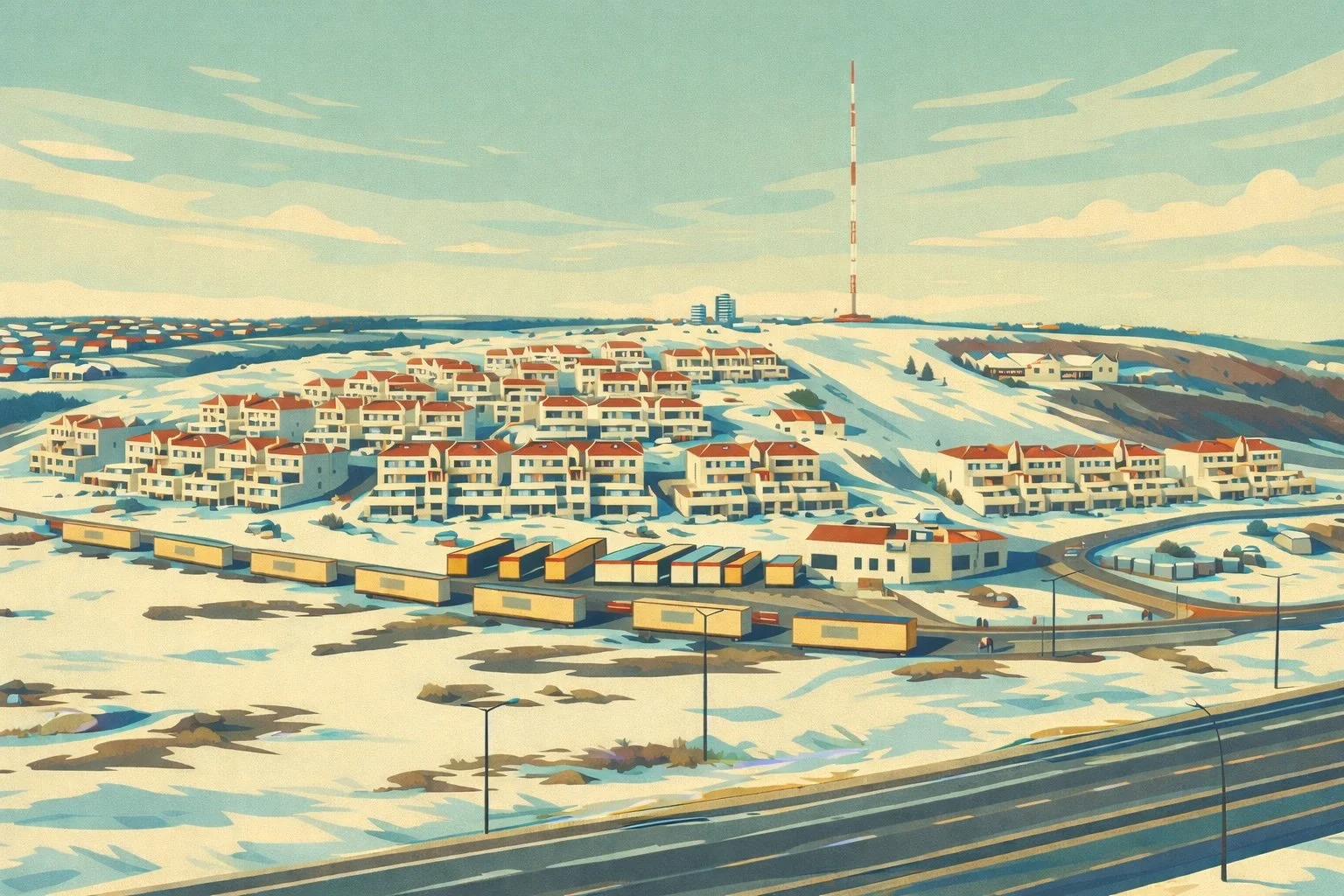
Imagine the Winter Olympics without an Olympic Village. The 3,000 athletes scattered across 50 different hotels throughout the city. Alpine skiers staying in Cortina, skaters in Milan, hockey players somewhere in between. Each in their own bubble, with their own schedule, their own cafeteria, their own gym.
That would be a monumental logistical nightmare, right?
Coaches would waste half their time just trying to find their athletes. Physios would have to lug their equipment from hotel to hotel. Forget team coordination, you'd have a hard time just getting everyone together for an official photo.
That's exactly why the concept of the Olympic Village has existed since 1932. Everyone in one place. A shared infrastructure. A single source of truth for knowing who is where, who is doing what, and who needs what.
However, when I look at how most fiber optic network managers handle their data, it's exactly like the chaos before the Olympic Village was invented. Data scattered across 15 different systems, conflicting versions of the same plan, critical information lost in emails or in the head of Bob, who just left on vacation.
Your network deserves better. It deserves its own Olympic Village.
The chaos of scattered data
Let me tell you a story that you will recognize.
Your planning team works in AutoCAD. Your "official" plans are DWG files dating back to 2018, maybe 2019 if you're lucky. Your field technicians fill out paper forms (or PDFs, if you're modern) that they bring back to the office at the end of the day. Someone, let's say Julie in technical services, enters this data into Excel. Or maybe into Access, if you still have someone who knows how it works.
Meanwhile, your sales team has its own Google Maps map with pins to identify where you have service. Customer service has its own management system that contains other information. Your operations manager probably has three or four "master" Excel spreadsheets that he updates himself because he trusts his numbers more than the official systems.
And when someone asks a simple question like, "How much fiber do we have left in this sector?", it takes half a day and three people to get an answer. And even then, you're not 100% sure it's the right answer.
That's not network management. That's organizational survival.
The concept of the Olympic Data Village
What exactly is the Olympic Village? It's a place where all athletes, regardless of their discipline, country, or level, come together under one roof. They share the same facilities, have access to the same services, and operate in the same environment.
The genius of the idea isn't just physical proximity. It's standardization and centralization. Everyone eats at the same cafeteria (even if the menu is varied). Everyone uses the same gym. Everyone has access to the same medical clinic. A shared infrastructure, adapted to everyone, but which respects the specific needs of each individual.
For your fiber optic network, this is exactly what your digital twin should be: the Olympic village of your data.
The digital twin: your centralized Olympic Village
A digital twin isn't just a fancy term for "database." It's a complete, living, centralized representation of your physical network. It's a place where ALL your data coexists in a coherent manner.
Think of it like the Olympic Village. Your physical infrastructure, cables, conduits, rooms, poles, is like the buildings in the village. Your connectivity data, which fiber goes where, which customer is connected how, is like the athletes occupying the rooms. Your metadata: installation dates, vendors, warranties, is like the village's support services.
Everything is here. Everything is connected. Everything is accessible.
Zonedge is exactly that: an Olympic village for your network data. A centralized warehouse where all information lives together, coherently, in an environment designed specifically for the reality of fiber optics.
The village rooms: how your data coexists
In an Olympic village, you don't just have a big dormitory where 3,000 people sleep side by side. You have an organized structure: buildings, floors, rooms. Everything has its place, but everything is connected.
Your digital twin works in the same way. Your data is organized logically:
Physical infrastructure: This is the "building" of the village. All your cables, conduits, pull chambers, access points. Not just lines on a map, but real entities with their characteristics, history, and condition.
Connectivity: These are the "corridors" that connect everything. How your fibers connect from one point to another, how information travels through your network. This is what differentiates a true telecom GIS from a simple map: the ability to track a connection from start to finish, understand dependencies, and see the impact of a change.
Customers and services: These are the "residents" of the village. Who is connected where, what service they receive, since when, and with what equipment. Not in a separate system, but integrated directly with your physical infrastructure.
History and documentation: This is the village's "archive." When each installation was done, by whom, with what materials. Photos, field notes, warranty documents. Everything is accessible in the same place as the technical information.
The advantages of a centralized village
Do you know why Olympic committees love the concept of the village so much? Because it simplifies EVERYTHING.
Does an athlete need a doctor? They know exactly where to go. Is the coach looking for their team? They know where to find them. Does someone want to organize a meeting? Everyone is there, no need for complex logistical coordination.
Your digital twin gives you exactly the same benefits.
One source of truth: No more conflicting versions. When someone has a question about your network, there is ONE place to go for the answer. Not three different systems saying three different things.
Natural collaboration: Your planners, technicians, sales team, customer service, everyone works with the same data. When a technician updates something in the field, the information is instantly available to everyone. It's as if all your athletes were training in the same gym: they see each other working, they learn from each other, they naturally coordinate their efforts.
Complete traceability: In an Olympic village, if something happens, you know exactly who was where and when. It's the same in your digital twin: you can trace the history of any element in your network. When was this fiber installed? Who made the splice? What materials were used? It's all there.
Access tailored to each role: Not everyone needs the same level of access to the Olympic Village. Athletes have access to certain areas, coaches to others, and the media to others. Your digital twin works the same way: your planners work in Zonedge GIS with all the comprehensive tools, your technicians use Zonedge Terrain adapted for mobile work, and your support team quickly consults Zonedge Web. Same village, different access points depending on needs.
The nightmare of those who don't have a village
Want to know what managing a network without a centralized digital twin looks like? Let me describe a typical day.
It's 10 a.m. A customer calls to ask if they can get service. Your sales representative must:
Check on Google Maps if the house is in your territory.
Call technical support to find out if there is service in this area.
The technician must retrieve the AutoCAD drawings (if he can find them).
Check in Excel if there is any remaining capacity
Perhaps call a colleague who knows this sector better.
Get back to the customer 2-3 hours later with an approximate answer.
Meanwhile, your competitor who has a digital twin? Their sales rep responded in 30 seconds. They checked their system, saw real-time availability, and took the order. Game over.
It's not just a question of operational efficiency. It's a question of competitiveness.
Build your Olympic village
"OK," you say to yourself, "the Olympic Village idea is all well and good, but my network already exists. My data is already scattered. How do I bring everything back to one place?"
The good news is that you don't have to tear everything down and start from scratch. Building your digital twin is like building an Olympic village: it's done in phases.
Phase 1, The foundations: You start by migrating your basic infrastructure. Your main cables, your backbone, your major distribution points. It's like building the first buildings in a village.
Phase 2, The population: You add the details, customer connections, splices, equipment. It's like when athletes start arriving and occupying their rooms.
Phase 3, Services: You integrate your processes, workflows, and other systems. It's like opening the cafeteria, gym, and medical clinic. The village becomes truly functional.
Phase 4, Optimization: You refine, improve, and add features. It's like improving the village's facilities based on user feedback.
Zonedge supports you through each of these phases. We have migrated hundreds of networks, from small regional operators with a few hundred customers to major players with tens of thousands of connections. We know the way, we know the pitfalls, and we know how to make the transition as smooth as possible.
A village that grows with you
Here's what's great about the Olympic Data Village concept: it grows with you.
The 1932 Olympic Games had a few hundred athletes. Today, there are more than 3,000 athletes. The concept of the village has evolved and adapted, but the basic principle remains the same: everyone together in a cohesive environment.
Your digital twin is the same. Whether you have 500 customers or 50,000 customers, the principle remains the same: all your data in one place, in a consistent environment, accessible to everyone who needs it.
Adding a new sector? It integrates naturally into your village. Acquiring another operator's network? You bring it into your village. Deploying new technologies? Your village evolves to accommodate them.
The difference between surviving and performing
Ultimately, the real question is: do you want to manage your network in survival mode or performance mode?
Survival mode means dealing with scattered data, systems that don't communicate with each other, and conflicting versions of the truth. You spend your time searching for information, reconciling data, and putting out fires caused by missing or incorrect information.
Performance mode means having your own Olympic village. A centralized digital twin where all your data coexists in a coherent manner. You spend your time strategically managing your network, not looking for deals.
Olympic athletes perform better when they have access to the best facilities, state-of-the-art equipment, and an optimized environment. Your team performs better when it has access to a comprehensive, centralized digital twin designed specifically for the reality of fiber optics.
Welcome to the village
The Milan-Cortina 2026 Games are approaching. Thousands of athletes will converge on the Olympic Village, a place designed specifically to enable them to perform at their best.
And where is your data? Scattered across 15 different systems? Lost in Excel files? Hidden in your employees' heads?
Or do they have their own Olympic Village, a centralized digital twin where everything coexists coherently?
Because ultimately, it's not just a question of technology. It's a question of management philosophy. Do you believe in the power of centralization, consistency, and integration? Or are you comfortable with organized chaos?
Your network deserves its own Olympic village. Your teams deserve to work in a consistent environment. Your customers deserve the level of service that only a complete digital twin can provide.
So, ready to build your village? Contact us!