
Fiber connections are like tree roots: invisible, but essential to everything that lives above ground
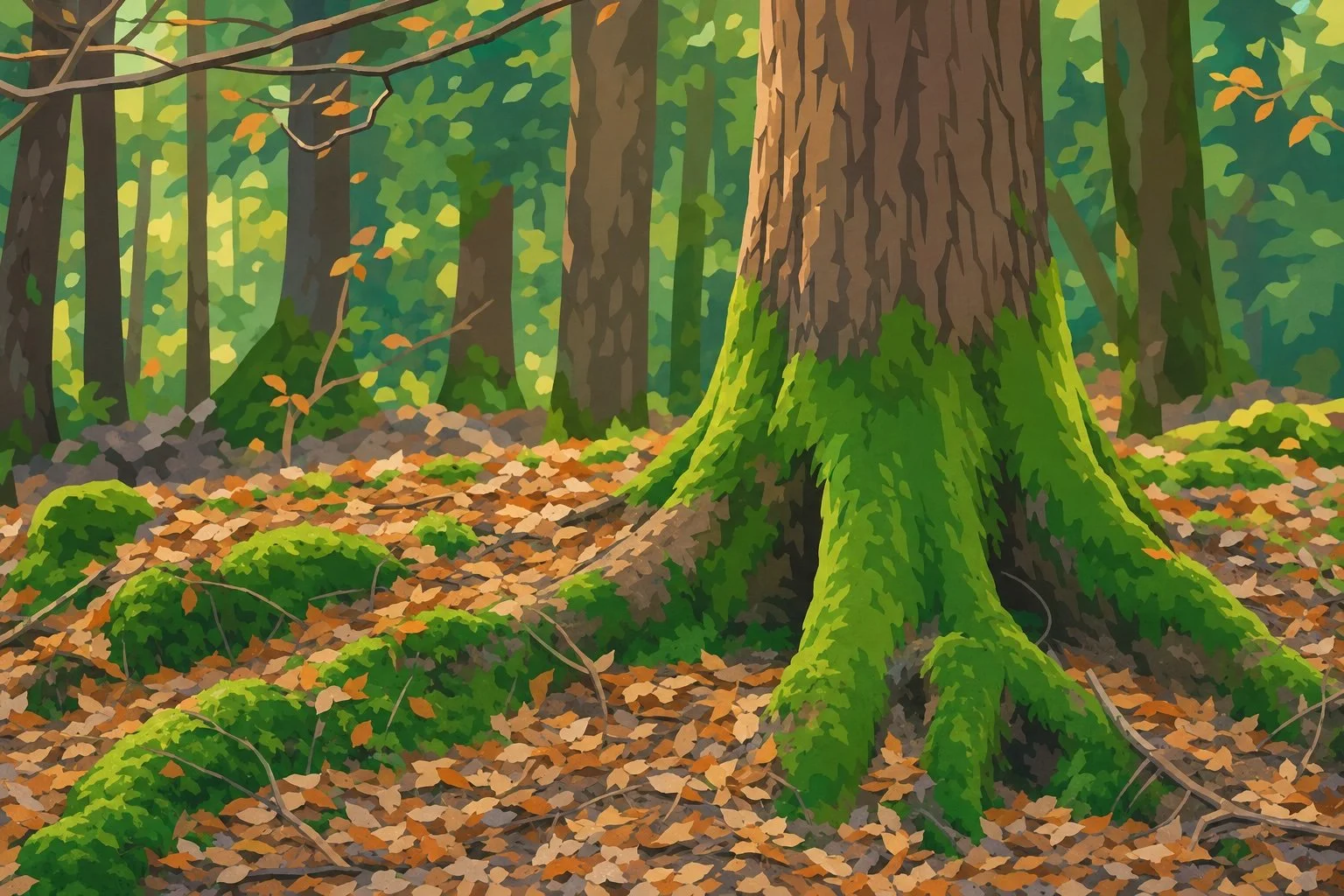
Have you ever thought about that when looking at a big oak tree? The real foundation isn’t what you see. The branches, the foliage, everything that gives the tree its character, only stay in place because there are miles of roots spreading out in every direction, visible or hidden, doing the work without fanfare.
That's exactly what fiber optics is for cities and regions. Except that its roots grow upward.
The invisible force that keeps everything running
When you go online in 2026, you don’t think about cables. You just think, “I need to video conference right now.” You press a button. It works. That’s the magic of the network doing its thing. But above your head, there’s a colossal infrastructure: hundreds, thousands of kilometers of fiber-optic cable strung between poles that require planning, installation, maintenance, and above all, a precise understanding of what actually exists.
Because here’s the thing: you can’t map fiber-optic cables the same way you map a street. They run between poles, cross paths with other utilities (electricity, telephone, cable), and follow routes that change depending on the topography, right-of-way agreements, and obstacles. It gets damaged (a storm that rips out a section, a truck that hits a pole, a branch that wraps around a conduit), and when a fiber optic cable breaks, an entire neighborhood loses its connection.
Why invisibility comes at a high cost when you don't know how to manage it
Imagine a city like Moncton or Kingston deciding to roll out its own fiber-optic network. Elected officials want everyone to be connected. It’s a good idea. But the reality is that, after three years of operation, no one really knows:
Exactly which pole is each cable attached to
How the sections interact and connect
Who has permission to access which section (electricity, Bell, municipality)
Where there are weak or loose spots
This kind of uncertainty causes problems at 7 a.m., when a storm rips a section of fiber optic cable from one pole to another, or when a truck that’s too tall hits the cable at the intersection of Main Street. For two hours, no one knows exactly where to go. The team drives to the last known location (from 2021), tries to find the damage between the three poles in the area, and finds nothing. Meanwhile, calls are coming in. Accusations are flying. The operations manager wonders why his network map looks like a scribble.
How Roots Become a Source of Strength Rather Than a Mystery
That's where Zonedge makes a difference.
Think of the platform as a scanner that creates a detailed map of all your fiber connections. It doesn’t just locate them, it documents them. Which poles do they run along? How are they attached? What other infrastructure do they share the airspace with? What are the access points, cabinets, and splice points? Which sections are vulnerable to storms or collisions? All of this is your network’s digital twin.
When a field technician identifies a faulty splice, when a configuration changes, or when a section needs to be repaired, the information is entered into the Zonedge platform. It doesn’t get lost in a notebook. It doesn’t rely on the memory of the guy who installed the cable four years ago (and who may have moved on to another job). It becomes live, up-to-date, searchable, and actionable data.
Your operations manager opens the map. He can see exactly which utility pole and where the damage occurred. He knows which area is affected. He can predict how many customers will be impacted even before dispatching a technician. And when the field team rushes out to make the repair, they don’t waste time searching among the poles, they know exactly where to go, how to get there, and what hazards to avoid (power lines, cables from other utilities, sensitive attachment points).
The network is becoming an asset
Whereas a fiber outage costs you time and credibility (if you have to call three times to figure out where to go), a well-documented network becomes an asset again. Your customers see a team that knows what it’s doing. Your technicians save time. Your emergency expenses go down.
And for municipalities investing in fiber infrastructure to attract businesses and residents, having an up-to-date and reliable map becomes a selling point. "Yes, we have fiber. And yes, we know exactly where it is and how to maintain it."
It's simple: the roots remain visible, resilient, and well-documented. They are what support everything growing above ground.
Connections are never "just" invisible. They deserve to be recognized. Zonedge makes sure you never lose sight of them.
