
Free practice, qualifying, production: why your fiber network needs the F1 strategy
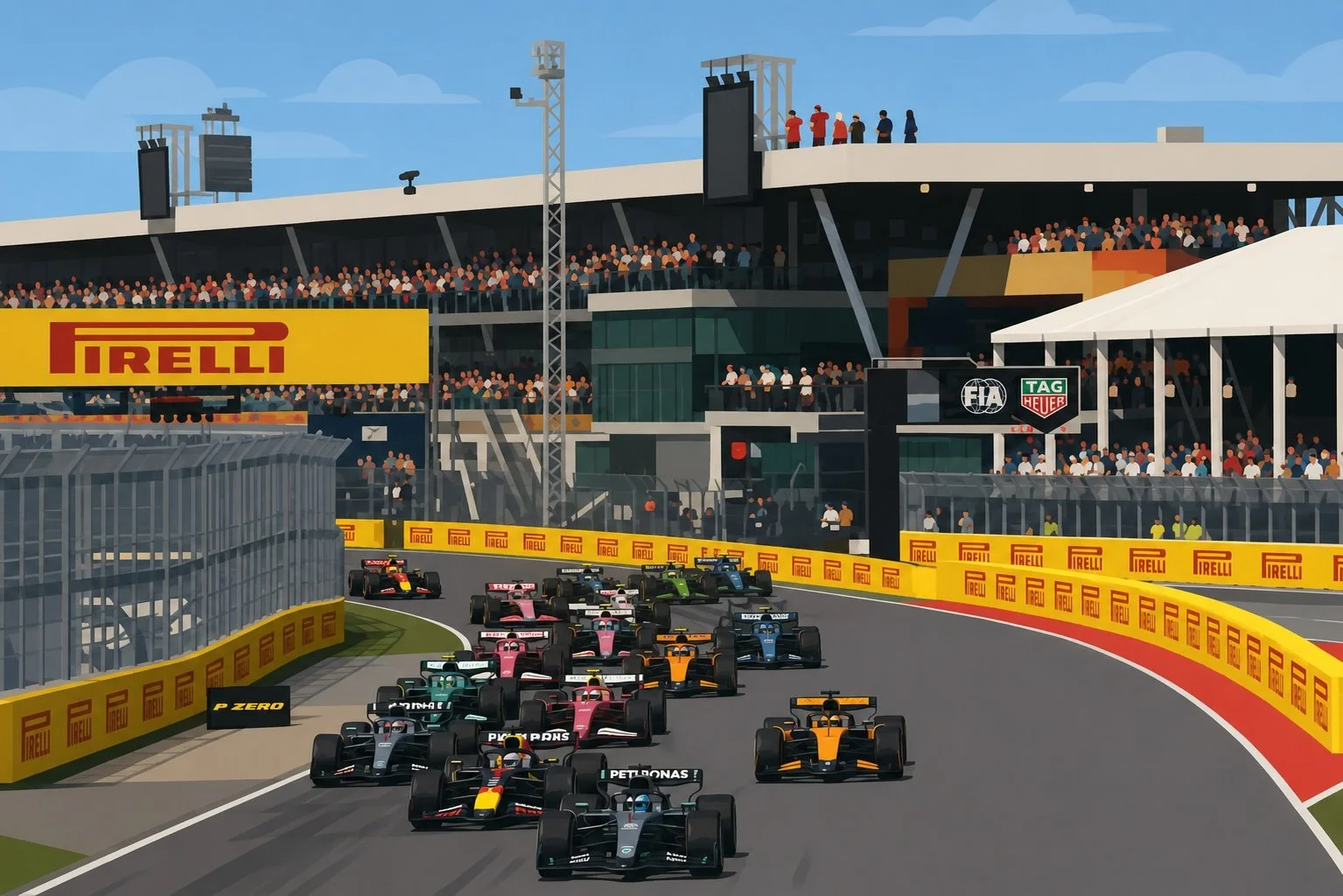
On Sunday, the cars will race around the Gilles Villeneuve Circuit on Île Notre-Dame at 300 kilometers per hour. It’s spectacular. But what happens before the race is what makes it all possible.
And I swear, it’s exactly like a fiber-optic network. Free practice, qualifying, the race, it’s a schedule of operations that’s a lot like managing a communications infrastructure. You need real-time data, constant adjustments, and a precise roadmap to make sure nothing goes off the rails.
Free practice: that's your initial assessment
Friday is the day Verstappen, Leclerc, and the rest of the field take to the track for the first time. No points are on the line. The engineers collect data: how do the tires, brakes, and aerodynamics perform? Does the car do what’s expected of it?
That’s exactly what you should do with a fiber network before selling its services. Got a new branch to roll out? An infrastructure that’s just been completed? Friday is your “free practice” day. You test, you measure, you collect real data, not just what you assumed.
The problem is that many operators skip this step. They think that if they’ve followed the construction specifications, everything will go smoothly. Spoiler: it never goes as smoothly as expected. A cable deviates from the plan, a splice isn’t as good as it should be, a splice has unexpected attenuation. That’s what you discover during free testing.
Zonedge gives you an accurate picture of what actually exists on-site. You can compare the current state of the infrastructure to your original design, identify discrepancies, and adjust your plan accordingly. You arrive on-site with up-to-date data, not an outdated document.
Qualifying: It's all about optimizing under pressure
Saturday is the moment of truth. The cars complete a quick lap, and the results determine who starts from pole position on Sunday. The teams must optimize every tenth of a second. They adjust the wing, change the tires, and make minor tweaks based on data from free practice.
That's when things get stressful. You don't have much time. The data you collected on Friday now tells you where to take action.
It's the same with a fiber network. Once you know exactly what's in place, thanks to your diagnostic, you need to optimize it. You might decide that certain paths should take a different route. You might discover that a splice needs to be redone. You might realize that you can add a branch because the infrastructure is better than expected.
That’s where a platform like Zonedge really makes a difference. Instead of spending days comparing drawings, field surveys, and numbers in Excel, you can make adjustments or run simulations in real time within your digital twin. You can see the impact of a change immediately. If you decide to move a splice, you can see right away how that affects the rest of the network.
F1 teams have thousands of sensors on their cars during qualifying. They know exactly what’s going on. You deserve the same visibility on your network.
The Grand Prix: it's all about real-time operations
Come Sunday, the die is cast. The cars are what they are. The track is familiar. No one is going to rebuild the engine between the start and the finish.
What changes is what happens over the course of the 70 laps. There are flat tires, collisions, and unexpected weather. The teams have to react in real time. They track every position, adjust their strategy, and communicate with the driver over the radio.
Once a fiber network is up and running, it’s the same as any other system. You can’t just cut a cable because you’re bored. But there are unforeseeable events. An excavator breaks a cable at 7 a.m. A technician has to splice a connection for an urgent request. A customer discovers a problem, and you have to respond immediately.
In this case, you need full visibility. If a fiber is broken, you need to know right away:
Where exactly is it broken?
Which customers are affected?
What are the alternative routes?
Where can I get it repaired?
You can’t afford to say, “Wait an hour. I need to find the map.” You need up-to-date information that you can access from your phone while in the field. You need your office team to know exactly where you’re working. You need to be able to document what you’ve done so that the next emergency can be handled more quickly.
During the Grand Prix, F1 teams don’t sit around waiting. They don’t weigh their options. They take action. Because they’ve spent weeks preparing, they know exactly what needs to be done.
Before the Grand Prix, it's up to you
On Sunday, you can't make any drastic changes to your strategy. The die is cast. But everything that happens before, free practice, qualifying, setup, is 100% in your hands.
It's the same with a fiber network. You control how you build it, how you document it, and how you optimize it. Once it's up and running, you still have some control, but you're also more vulnerable to surprises.
The difference between a team that manages its network well and one that’s constantly chasing problems isn’t luck. It’s preparation. It’s having a clear map from the start. It’s being able to see your infrastructure in real time. It’s being able to make changes quickly without accidentally breaking something else.
Zonedge gives you exactly that. A reliable digital twin of what’s actually happening on the ground. The ability to optimize before going into production. And once you’re in production, complete visibility so you can respond quickly.
The Grand Prix is won on Sunday, but it’s prepared for over the three days leading up to it. Your fiber network is no different. The quality of operations depends on the quality of preparation.
See you Sunday for the Grand Prix. And don't forget: on a race track, just like with fiber optics, the one who prepares the best is the one who crosses the finish line first.
