
Are You Really Harvesting the Data Your Field Teams Produce?
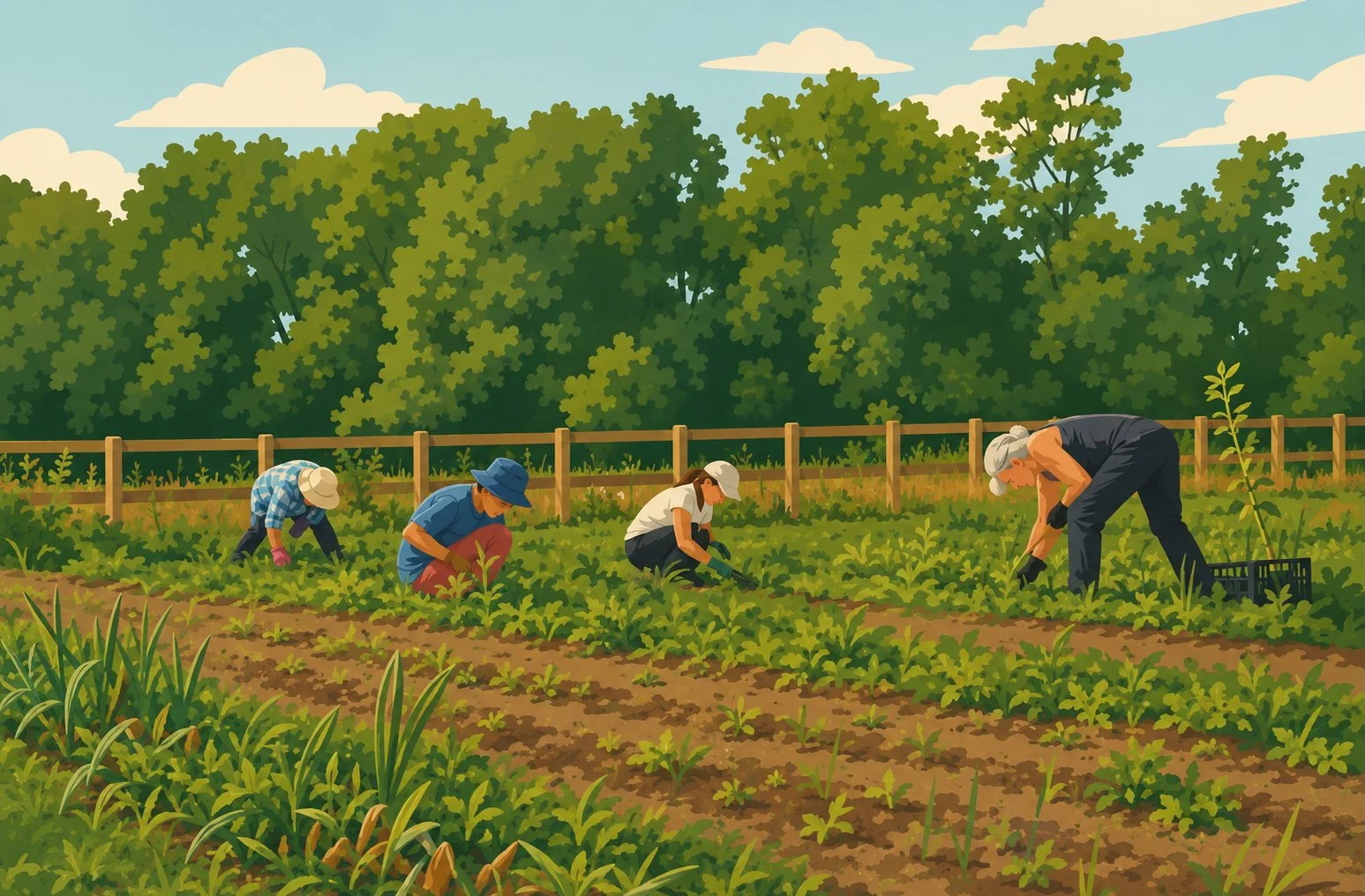
August is the harvest season.
Farmers spend months preparing their fields, watching the weather, adjusting their practices. Then comes the moment to harvest the fruit of all that work. But imagine for a second that after a full growing season, a farmer decided to let the crops rot in the field. No one would do that on purpose; it sounds absurd.
Yet that's exactly what happens in a lot of fiber networks.
Every day, your field teams gather an impressive amount of information: photos, measurements, observations, network changes, plan corrections. But once the work is done, that data often gets stuck in an email, a phone, a notebook, or a spreadsheet forgotten on someone's desktop. Like a harvest left to rot instead of being gathered and stored.
The question to ask yourself is simple: are you really harvesting the data your teams produce every day, or are you letting it rot in the field?
Your technicians are your biggest source of data
The field is the crop. It's where the reality of the network reveals itself, day after day. No matter how good your plans are, it's the technician on site who sees the new equipment installed, the cable moved after a storm, the damaged enclosure on an aerial line. Every visit becomes a chance to gather new data on the real state of your network.
The problem is that this gathering often happens by hand, informally, and gets lost on the way back to the office. Zonedge Field solves this by giving technicians a tool to document directly on site, the moment they make an observation: a photo, a note, a measurement, automatically linked to the right spot on the network. No more relying on memory to write everything down at the end of the day.
The problem isn't collection, it's loss
Most operators already collect a huge amount of information. The real problem is that the harvest happens but never makes it into the barn.
Photos stored on a personal phone. Notes scribbled on paper. Emails that can't be found six months later. Spreadsheets that exist in three different versions on three different desktops. The result: duplicated work, unnecessary site visits to verify information that was already documented somewhere else, and hours lost searching for data that exists somewhere, with no one sure where.
Zonedge centralizes all field data directly into a single network database. A photo taken by a technician on a Tuesday morning becomes immediately available to the engineer planning an expansion the following Friday. The barn is full, organized, and everyone knows where to find what they need.
An unlabeled harvest is worth far less than a well-identified one
A photo taken in the field might seem useful at the moment. But six months later, who remembers where it was taken, what equipment it shows, or in what context? Without that information, its value drops quickly. It's like harvesting vegetables without labeling them: once stored, there's no way to know which field they came from or when they were picked.
Data alone isn't enough. It has to be tied to the right network asset, the right location, the right moment. In Zonedge, every photo, every note, every measurement is directly linked to the relevant infrastructure in the database. No guessing, no searching: the information is labeled from the moment it's created.
The best decisions rely on recent data
Managers are constantly making decisions about expansions, maintenance, and investment priorities. Those decisions are only as good as the data behind them, just as a farmer planning next season from outdated data would plan worse than one who follows their fields closely, day after day.
A network map updated three years ago versus one enriched every day by field teams: which one would you choose to make an expensive decision? With Zonedge, every field update feeds directly into the central database, in real time. Your decisions are based on the current state of the network, not a snapshot from three years ago.
Turning every intervention into collective knowledge
A common challenge in organizations: when a technician leaves, part of the network's knowledge leaves with them. It's like a farmer who keeps their entire growing method in their head and never writes anything down. The day they leave, that know-how disappears with them.
That accumulated expertise should belong to the organization, not just to one person. Zonedge captures every field observation in a shared, permanent database, accessible to all authorized stakeholders, today and five years from now. Zonedge becomes the network's collective memory, the one that stays even as people move on.
Harvesting today to prepare tomorrow's harvests
Farmers don't harvest only for the present moment. They also use that data to forecast coming seasons, adjust their methods, and improve their yields year after year.
Network operators should do the same. Every piece of field data collected today helps plan better for tomorrow, speed up future interventions, and reduce the risk of error. In Zonedge, every intervention gradually enriches the network's digital twin, much like every harvest enriches a farmer's knowledge of their land.
The harvest doesn't end in the field
A field team doesn't just do repairs, installations, and inspections. It also produces an extremely valuable resource: data.
So the real question isn't whether your teams are collecting information. It's whether your organization is able to harvest it, store it, and put it to use, rather than letting it rot in the field.
With Zonedge Field, field observations become usable data right away, accessible to every stakeholder and integrated into a single source of truth.
Because the best network decisions always start with the best data. 🌾
Ready to stop letting your data rot in the field?
Request a Zonedge demo and discover how to turn every field intervention into usable data, starting today. We'll show you exactly how it fits into your network, your teams, and the way you already work.
