
The Super Bowl of Fiber Optics: Why managing your network without the right tools is like playing without a game plan
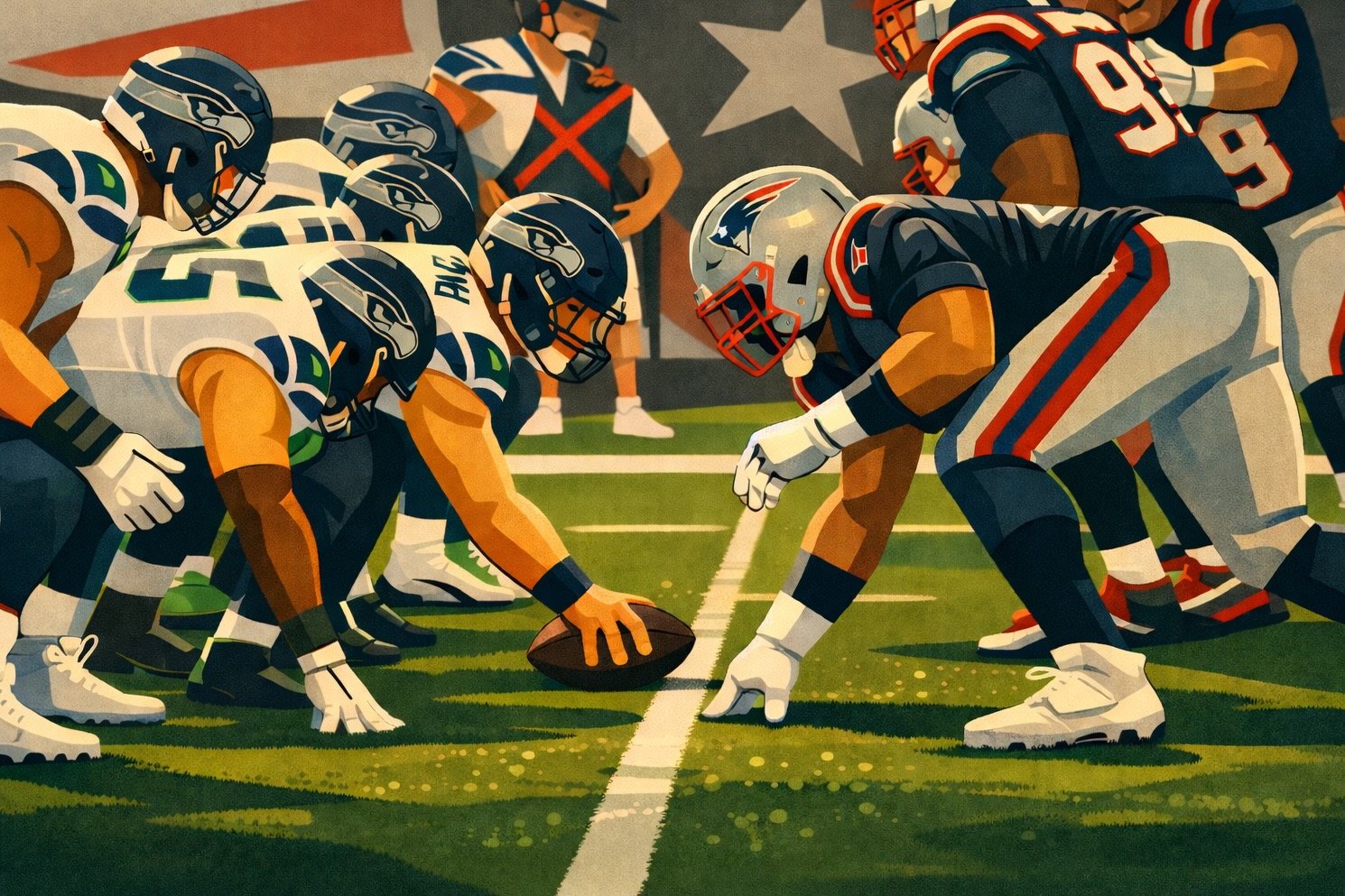
On February 8, 2026, millions of people will gather in front of their TVs to watch the New England Patriots take on the Seattle Seahawks at Levi's Stadium in Santa Clara. It's Super Bowl LX, the 60th NFL championship. But do you know what makes this experience possible for all these fans? A perfectly orchestrated fiber optic network.
And you know what? Managing a telecommunications network is a lot like preparing a team for the Super Bowl. Except that instead of playing one game a year, you have to perform 365 days a year, 24 hours a day.
So today, we're going to talk about what happens when you try to manage your fiber optic network without the right tools. Spoiler alert: it's like asking a football team to win the Super Bowl without a coach, without a game plan, and with each player doing their own thing in their corner.
The quarterback playing blind: when you don't have the big picture
Imagine Tom Brady (yes, I know he's retired, but bear with me here) on the field with no communication with his receivers. No game plan. No overview of the field. He throws the ball into the air and hopes someone will catch it.
Does that sound absurd? Yet that's exactly what happens when you manage your fiber optic network with disconnected tools.
Your field technician finds a problem with a splice. He writes it down in a notebook or texts it to someone in the office. Meanwhile, your engineering team is working on plans that are three months old in AutoCAD. Your customer service department tries to respond to a customer by looking at an Excel file that hasn't been updated since last week.
Everyone is working hard. But no one sees the same playing field.
With Zonedge, it's like giving your quarterback a real-time aerial view of the field. Your digital network twin is THE single source of truth. When a technician documents a change in the field via Zonedge Terrain, the information is instantly available to your entire team, engineering, customer support, and planning.
It's not magic. It's just organizational intelligence.
Offense and defense not communicating: the danger of silos
In football, if your offense and defense don't communicate, you're done. The offense spends its time on the field while the defense stays on the bench, unaware of what's going on. Total chaos.
In your telecom organization, it's often the same thing. Your field teams work with their own data. Customer service has its system. Engineering has its own. The sales department has another version of the truth.
A customer calls because they have lost service. Your support technician spends 20 minutes searching for the information in three different systems. Meanwhile, a field technician has just documented a cable break in that area... but the information is still on their phone, not in the system.
The result? Your customer waits. You waste time. And your technician may be traveling for nothing because someone else is already working on the problem.
With Zonedge, it's as if your entire team, offense, defense, special teams has access to the same giant touchscreen in the locker room. Everyone sees the same information in real time, no matter where they are.
The playbook from 1986: when your tools slow you down
Imagine the Patriots arriving at the Super Bowl with the playbook from their first championship appearance in 1986. "Guys, we're going to run plays the whole game!" Meanwhile, the Seahawks arrive with real-time analytics, drones that analyze the opposing defense, and tablets on the sidelines.
Who do you think will win?
That's exactly what happens when you try to manage a modern fiber optic network with Excel, AutoCAD, and photos on your technicians' phones.
Yes, technically, it could work. Just as technically, you could win a soccer game in 2026 using strategies from 1986. But why make life so complicated?
With Zonedge, you have access to tools designed specifically for modern telecommunications networks:
Intelligent modeling: Your 144-fiber cable isn't just a line on a map. It's an intelligent object that knows its specifications, type, and attenuation, just as if every player on the field knew exactly what their role was.
Fiber tracking: You can track the entire path of a fiber from the central office to the subscriber in just a few clicks. It's like having a GPS that shows you exactly how the ball will get into the hands of your receiver.
Connectivity management: When you create a splice, the system automatically understands the impact on your network. No need to recalculate everything manually.
Perfect coordination: synchronize 53 players (or your entire team)
You know what's impressive about the Super Bowl? Watching 11 players on the field move like a single, well-oiled machine. The receiver makes his route at exactly the right moment. The quarterback throws the ball precisely when he needs to. The offensive line blocks like a synchronized wall.
How much practice and coordination does it take to reach this level?
The same principle applies to your telecom operations. Except that instead of 11 players, you may have 5, 10, or 50 people who need to be perfectly synchronized:
Your field technicians who install and repair
Your engineers who design and plan
Your customer service team that answers questions
Your marketing team targeting the right sectors
Your managers who make strategic decisions
If all these people are working with different data, you don't have a team; you have 53 people running around in all directions hoping that something will work out.
The Zonedge ecosystem is like having a communication system in every player's helmet. Everyone hears the same plays. Everyone sees the same strategy. Everyone works with the same information.
Zonedge GIS: Your command center, where you design and manage the network in detail Zonedge Terrain: Your mobile app for documenting in the field, even without a connection Zonedge Web: Your portal accessible to everyone, where each department can view the information it needs
No duplication. No conflicts. No technicians are traveling for nothing because no one knew that a colleague was already on site.
The coach who sees everything vs. the player on the field
Bill Belichick (the legendary former coach of the Patriots) was known for his ability to see the game from every angle. He could analyze trends that no one else saw. While the players on the field were experiencing the action in real time, he had the big picture.
In your telecommunications network, you need both perspectives.
Your field technicians are like players; they experience the action firsthand. They see the damaged cable, the box that needs replacing, the faulty splice.
But you also need the coach's perspective. Your network manager needs to be able to see: "Hey, we've had three outages in this area this week. Maybe there's a bigger problem?" Or: "Our occupancy rate is approaching 80% in this neighborhood, we should plan for expansion."
The problem with disconnected tools? You lose that big picture view. Information gets stuck in silos. You react to problems instead of anticipating them.
With Zonedge, you get both perspectives:
Detailed field view: Every cable, every splice, every piece of equipment accurately documented
Analytics and reports: Powerful research tools that allow you to see trends, identify risks, and optimize your network
It's like having Belichick on the sidelines AND the playbook in your quarterback's hands.
Real-time statistics: no time for guesswork
During the Super Bowl, analysts have access to thousands of real-time statistics. Pass completion rates. Yards gained per carry. Time of possession. Everything is measured, analyzed, and used to make better decisions.
You should have the same level of visibility in your fiber optic network.
How many fibers are available in this sector? What is your average occupancy rate? How many service points are at risk of saturation? Where are your oldest cables that may soon need to be replaced?
If you have to spend an hour digging through Excel spreadsheets to answer these questions, you have a problem. A big problem.
With Zonedge's search and analysis tools, you can find these answers in just a few clicks:
Quick search: Type in a cable number, address, or equipment name—instantly find what you're looking for.
Advanced queries: Combine multiple criteria for sophisticated analyses ("all cables with more than 96 fibers installed before 2020 with an occupancy rate greater than 75%").
Thematic visualizations: See your network color-coded by usage rate, installation age, and operational status.
No guesswork. No assumptions. Just reliable data that helps you make better decisions.
Preparation before the big game: planning and documentation
The teams that make it to the Super Bowl have spent months preparing. They have studied every play their opponents have made. They have planned for every possible scenario. They have documented every detail of their strategy.
Imagine showing up at the Super Bowl and just winging it. "We'll see what happens and adjust as we go!" That wouldn't work at all.
The same applies to your fiber optic deployment projects. What is the difference between a successful project and a budget-busting nightmare? Planning and documentation.
With Zonedge, you have design-assisted tools that guide you through the process:
Creation palettes: Preconfigured templates for your standard equipment
Automatic assignment: Fibers are intelligently assigned according to your rules.
Real-time validation: The system alerts you if something does not meet your standards.
It's like having a digital playbook that ensures every play is executed correctly.
And after deployment? Everything is documented. Geotagged photos. Exact specifications. Installation dates. If a technician needs to intervene in three years, they will have all the information they need to do their job efficiently.
Adaptability: when the initial plan falls apart
You know what often happens at the Super Bowl? The perfect game plan you've been preparing for weeks... becomes useless after the first quarter. The opponent does something unexpected. A key player gets injured. You have to adapt quickly.
The best teams are those that can adjust in real time without losing their cohesion.
The same applies to your telecom operations. A cable is accidentally cut. Equipment breaks down. A new residential development appears sooner than expected. You need to be able to react quickly.
But if your data is scattered across five different systems and no one knows exactly which version is the most recent... good luck adapting quickly.
With an up-to-date digital twin in Zonedge, you can:
Instantly identify all customers affected by an outage
Find the fastest alternative route to restore service
Document changes in real time so that everyone is aware of them.
Plan repairs with all the necessary information
It's like having the ability to revise your strategy at halftime with all the relevant statistics in front of you.
The invisible infrastructure that makes everything possible
Do you know why the 68,500 spectators at Levi's Stadium will be able to post their photos of the game on Instagram in real time? Why will millions of viewers have an ultra-clear 4K image? Why will journalists be able to transmit their reports instantly?
Because of a perfectly designed, managed, and maintained fiber optic network.
The audience sees the show. But behind the scenes, there is a complex infrastructure that must function perfectly. Miles of cables. Thousands of connections. Dozens of pieces of equipment that must all work together flawlessly.
And somewhere, there's a team of telecom professionals making sure everything works. These people have no room for error. They don't have the luxury of saying, "Oops, we lost the signal during the game."
Your network is no different. Your customers expect everything to work, period. They don't care that you manage your inventory in Excel. They just want their connection to work.
That's why you need professional tools. Not just "good enough." Not just "good enough to get the job done." Tools that truly understand the complexity of what you do.
The end result: winning your own Super Bowl
In the Super Bowl, only one team wins. But in your daily operations, you can win every day if you have the right tools.
What does "winning" mean in fiber optic network management?
Respond to a customer in 30 seconds instead of 20 minutes
Deploy a new neighborhood in 3 months instead of 6
Identify a problem before it becomes a major failure
Optimize your network to maximize your ROI
Transitioning from firefighter to strategist
With Zonedge, you stop playing by ear. You have a solid game plan. Your entire team is synchronized. You have real-time statistics to make the right decisions. You have the flexibility to adapt when something changes.
It's not just another GIS. It's not just another tool. It's a complete ecosystem that truly understands what you do and is designed to help you do it better.
Ready for your kickoff?
On February 8, the Patriots and the Seahawks will face off for the NFL championship. One team will win. The other will go home disappointed.
But you know what? Both teams will have played with the best tools available. The best coaches. The best strategies. The best equipment.
Why would you settle for less when it comes to managing your telecommunications network?
If you are still managing your fiber optic network with tools that were designed for other purposes... if your teams work in silos with disconnected data... if you spend more time searching for information than making decisions...
It may be time to change your game plan.
Zonedge is your dream team for network management. It's the coach who sees everything. It's the playbook that evolves with you. It's the perfect synchronization between all your teams.
So, ready to play in the big leagues?
While you watch the Super Bowl on February 8, think about all the invisible infrastructure that makes it possible. And ask yourself: is my own network managed with the same level of professionalism?
If you want to stop improvising and start dominating your market, contact us for a demo of Zonedge. Because in telecoms, as in football, it's the best-prepared team that wins.