
What Wimbledon and Fiber Optics Have in Common
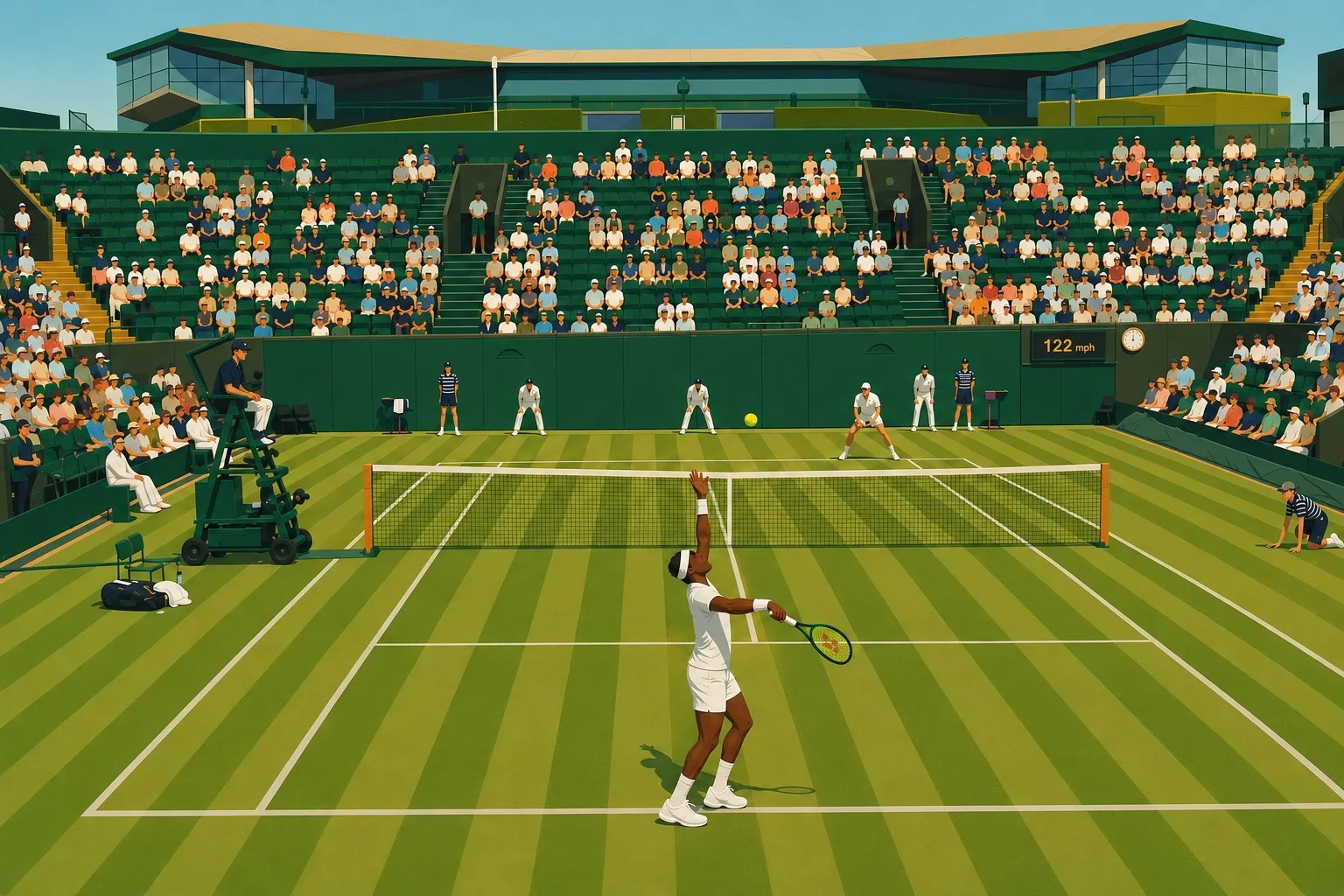
The grass at Wimbledon is cut to 8 millimeters. Not 7, not 9. 8. The team responsible for maintaining the courts spends weeks preparing the surface before the tournament’s first serve. Every blade of grass is measured, every area monitored, and every imperfection corrected before it really matters.
That's exactly how the best fiber network operators manage their infrastructure. Not after an outage. Before.
The playing surface that no one sees
At Wimbledon, spectators watch the players. No one thinks about the grass until someone slips, or a ball bounces unpredictably because a section of the court has dried differently. Then everyone notices it.
It's the same with a fiber-optic network. Your customers don't see the fiber buried under Victoria Street or Laurentides Boulevard. They see their connection. And when it fails, they notice.
In tennis, the court is the foundation of everything. You can have the best player in the world with the best racket, but if the surface isn’t in good condition, the match goes off the rails. An unevenness in the grass changes the trajectory of a ball, affects its bounce, and can cost you a decisive point. The pros know this, so they leave nothing to chance. They know the surface inside and out before playing on it.
For a fiber operator, the underground infrastructure? That's your court. The cables, splice enclosures, and access pits, that's your playing field. And if you don't know it inside out, you're playing blind.
The problem is that many operators manage their networks as if the grass at Wimbledon grew on its own. Plans that are five years old, updates made manually in a shared file, technicians heading out into the field with incomplete information. It works… until it doesn’t.
An excavator cuts a cable in Hawkesbury on a Tuesday morning. Who's impacted? How many customers? What's the length of fiber to replace? If you have to call three people before getting an answer, your network's not dialed in.
The dataset behind each transaction
In elite tennis, nothing is left to intuition. Coaches analyze hours of video, map out their opponents’ tendencies, and know exactly which areas a player is vulnerable in and which ones they dominate. Every decision on the court is based on a precise understanding of the situation: the player’s position on the court, the score, the opponent’s fatigue, and how the court surface behaves in humid conditions.
The best players don't see the court for the first time on game day. They already know it.
That’s exactly what a digital twin of your network promises. The Zonedge platform documents every component of your fiber infrastructure, every access manhole, every splice box, every cable segment, every connected customer. Everything is geolocated, linked, and updated in real time. When a technician performs a field service call, the information is uploaded to the platform. Your network map reflects what’s actually on the ground, not what was there three years ago.
Then, when an emergency call comes in, you don't wing it. You open Zonedge, pinpoint the problem, see what's affected, and send the right person with the right equipment. No unnecessary back-and-forth, no chain of calls to piece together the information.
An operator who works with up-to-date documentation is like a player who steps onto the court already knowing his opponent. Someone who works with outdated plans is like someone who’s discovering the court for the first time in the middle of a match. The difference isn’t just in efficiency, it’s in the end result for the client.
The game-changing setback
There’s a moment in almost every major match at Wimbledon when everything changes. It’s not necessarily the most spectacular point; often, it’s a small detail. A serve placed exactly where the opponent can’t return it effectively. An unexpected return. A tactical adjustment that throws the opponent’s entire game plan off balance.
In fiber network management, that moment happens, too. It’s when a municipality realizes that its network plans no longer match what’s actually underground. During an excavation project on King Street in Rockland, no one knew exactly where an active cable ran. The field technician had to improvise because the information he needed wasn’t available.
Situations like this are costly, in terms of time, repairs, and credibility with the affected customers. And in most cases, it’s not a matter of skill. It’s a matter of documentation.
With Zonedge, information flows both ways. What happens in the field is fed back into the platform. What’s in the platform is accessible to the technician in the field. There is no longer an “office” version and a “field” version of the network, there is only one, and it is always up-to-date. That’s what the digital twin is: a faithful, dynamic representation of what actually exists underground.
Tournaments are won before they even begin
The players who lift the trophy at Wimbledon in July didn't win it on Center Court. They won it during the months of preparation. The surface, the tactics, physical conditioning, knowledge of potential opponents, all of that is built well before the first shot is hit.
For a fiber network operator, the real competition begins before the outage, before the customer call, before the service failure report. It begins when you decide how you’re going to document, manage, and maintain your infrastructure.
A well-documented network in Zonedge is exactly that kind of preparation. You don’t wait for something to break before figuring out how your network is set up. You already know it, in real time, in detail, and accessible to your entire team. And that makes all the difference when you need to take action quickly, effectively, and without causing collateral damage.
Operators who manage their networks with Zonedge don't spend any less time in the field. They spend that time productively solving problems, not trying to figure out where they are.
At Wimbledon, 8 millimeters is the difference between a championship court and an ordinary one. In fiber network management, the difference lies in knowing exactly what’s underground, before someone else finds out for you.
Improve your accuracy. Request a demo!
