
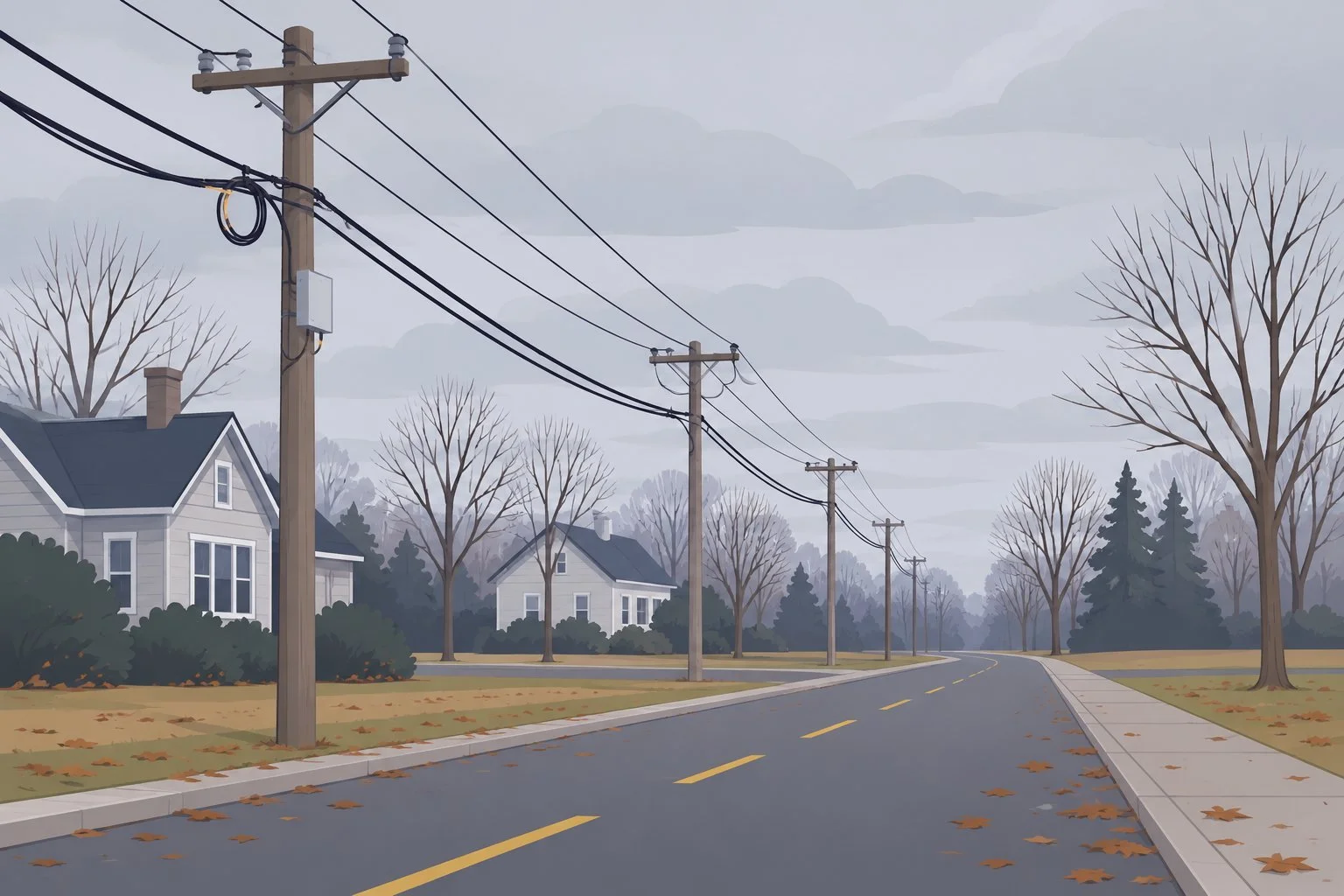
November. A regional operator’s team has just closed its last job sites of the season. The new cables are pulled, the enclosures are in place, and the connections are made. Marc, the engineering manager, opens the inventory to prepare for 2027 interventions and starts with a recently built area.
On the map, a cable still follows its original route. A technician’s notes say it was moved to get around an obstacle. An enclosure was installed two poles farther than planned, and two connections still need to be confirmed.
The work is finished. The data, not quite. This is not a problem of workmanship. It is the result of a season where the priority was to build. Completing the physical work and completing the network update are two separate steps.
What construction changes, and what the record retains
During the season, the network changes more than we tend to think. A route is moved to fit the terrain. A connection point is installed somewhere other than planned. A cable is added, replaced, or connected differently. Capacities are adjusted to meet a need that came up along the way. This is normal: design plans show what was intended, and as-built plans should show what was actually carried out.
The challenge is that the information ends up in several places at once: the original plans, the as-built plans submitted after the work, technicians’ photos and notes, tracking sheets, and the inventory and mapping the team consults every day. Each source may be accurate, and the whole may still not be.
Here is an example. The as-built plan shows that a cable was moved. The inventory still displays the old route. A few months later, a team consults the map and prepares its intervention based on information that is no longer correct. Nobody made a mistake in their work, but the gap is there.
Receiving a compliant document does not guarantee that everything in it has been integrated into the representation the team uses day-to-day. As-built plans document what was done. Reconciliation makes that information truly part of the network.
This is where the idea of a shared reference comes into its own. When the inventory, the map, and the history of changes are brought together in a single environment, the team has a common reference to find information and track how the network evolves.
What these gaps can cost in 2027
A documentation gap left in November can turn into an operational problem by spring. The team then has to verify an enclosure’s actual location before heading out, call the person who did the work, or compare several versions of a plan to determine which one is current.
Planning also becomes less certain. An assessment of available capacity, an address qualification, or an investment decision relies on an inventory whose accuracy is no longer guaranteed. And over time, missing information becomes harder to reconstruct, because other work has been layered on top. What stays in a technician’s notes or in one person’s memory does not end up in a shared reference.
The cost is measured in hours of searching, extra trips, delayed repairs, and decisions made with incomplete information. The teams preparing for 2027 will work from what they believe they know about their network. It had better be accurate.
Bringing the network up to date, then keeping it that way
End-of-season reconciliation does not have to become an endless project. It can start with four steps. First, gather the end-of-work documents: as-built plans, surveys, photos, and site notes. Second, identify the gaps by comparing the documented changes with the existing inventory, whether they involve routes, equipment, or connections. Third, validate what is uncertain, either with the people responsible or from available survey data, because missing information is not always an error, and questionable data deserves to be confirmed before it enters the inventory. Finally, integrate the changes into the network reference and keep a record that explains what was modified.
Depending on the volume of work and the state of the data, the effort will vary. But doing this work in November is a good opportunity to close the backlog. Ideally, updates happen during the work rather than waiting until the end of the season.
This is precisely where a specialized solution like Zonedge comes into its own. By bringing together mapping, equipment inventory, connections, available capacity, intervention history, and field photos in a single environment, Zonedge helps teams maintain a consistent representation of their network.
This shared knowledge is built through ongoing updates: changes are documented, uncertain information is validated, and modifications are integrated into the inventory. Office and field teams alike can rely on consistent information to understand the state of the network and how it has evolved. Construction changes the network. Zonedge helps your knowledge of the network evolve with it.
Before planning the next construction season, make sure your documentation reflects the one that just ended. Your network evolved in 2026. Your knowledge of that network should have evolved with it.
Find out how Zonedge can help your team maintain an inventory that reflects what is really in the field. Contact us.
